After deciding on our idea, I carried out some research into how much bullying really goes on over clothing, and I wanted to find out specifically how much it goes on in schools,and if it is taken seriously by teachers or people higher up within the school system. After discussions within my group, we spoke about how this type of bullying, from our experience, can tend to be seen as a joke, comments being made about the way someone dresses could be seen as comical by many people, even the person it’s directed towards, however others may find it much more hurtful.
In an article by The Guardian, which is titled “Teachers notice pupils are under pressure to buy certain brands and products to fit in with their peer groups”, teachers from schools were interviewed about bullying of this kind going on in schools. ‘Research from the teaching union, the Association of Teachers and Lecturers, says children are under heavy pressure to buy certain brands and products to fit in with their peer group.’ This backs up our point that whether many children realise it or not, even though they may not be getting bullied, they still feel the need to buy designer clothing to fit in with their peers. ‘Dr Mary Bousted, ATL general secretary said: “Bullying of this kind can be quite insidious, it can just be a look that a child is given, children feel under immense pressure to look right and having the key brands is part of that”.’ I think this in itself shows that teachers are noticing this issue going on, however the problem they are having is that it is extremely hard to protect students from commercial aspects, as many teachers are unable to bring about a change in how their students dress.
We also looked into a charity called ‘Ditch The Label’ who are an anti bullying charity who posted a bullying survey on their site. They found that 50% of young people have bullied another person, 30% of which do it at least once a week. They also concluded that appearance is cited as the number 1 aggressor of bullying, with 51% saying they were bullied because of attitudes towards how they look. We also looked at a few of their designs and how they tackled anti bullying campaigns.
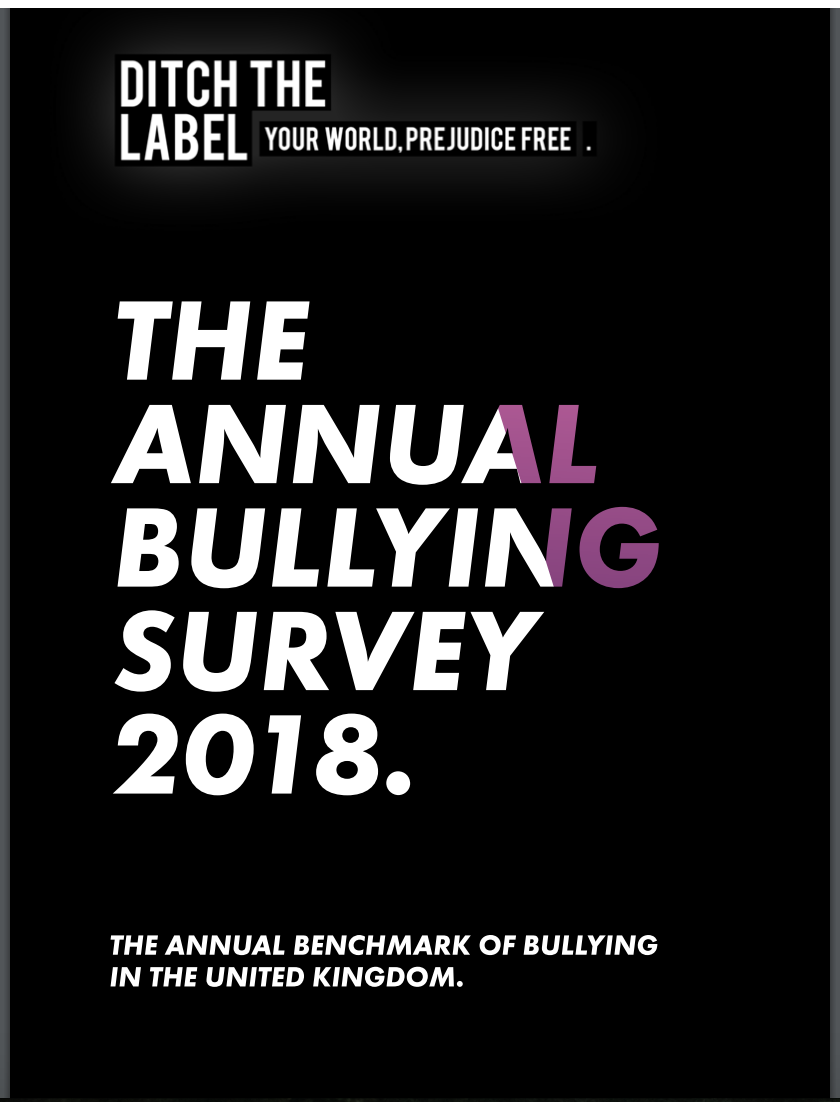
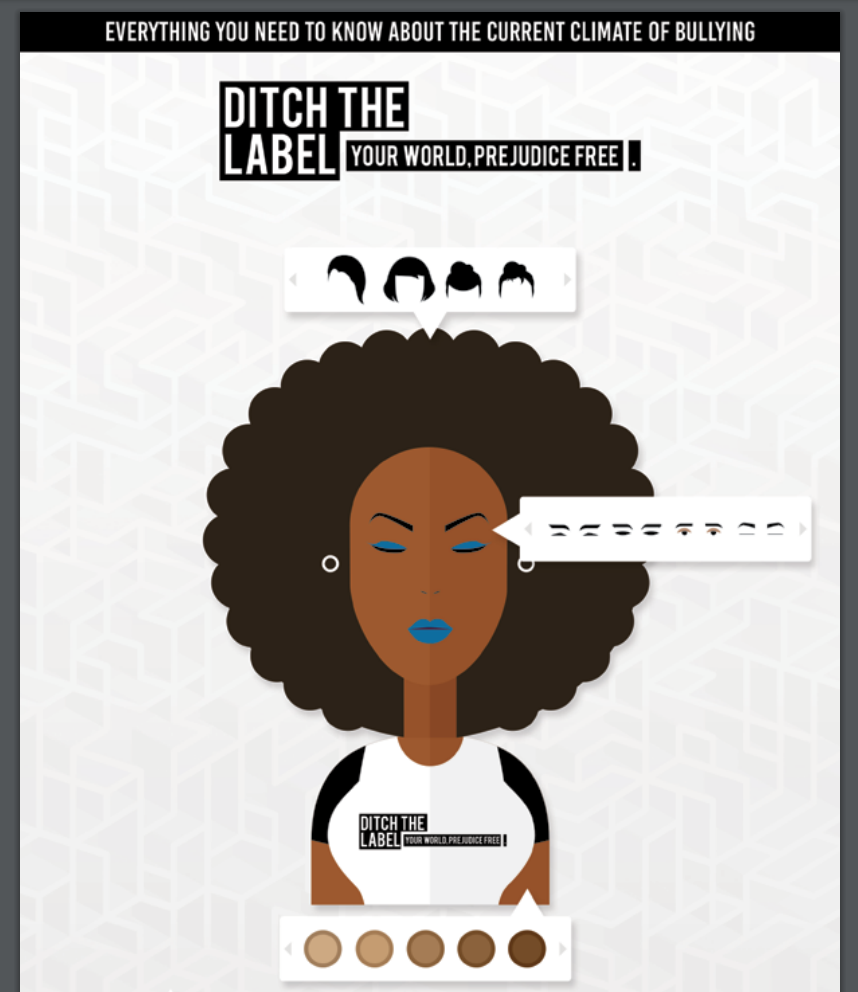
These are both Front covers for their annual bullying surveys, although both of them are contemporary and have a modern feel to them, i don’t think they do enough to make it clear to the reader that the bullying going on is as serious as it is, and especially the example on the top in black, other than the words bullying in the title it doesn’t show any imagery which would make you think about bullying like the bottom one does.
This research backs up our ideas that it does go on in schools more than a lot of people realise, and even though it may come across as a joke, or people may not take it seriously enough to brand it as bullying, but the research shows that children and young adults are under immense pressure to fit in with friends by buying designer clothing. Teachers are at the forefront of this, seeing the children who this is happening to every day and I think if 85% of these teachers think “possession of fashionable goods is important to their pupils” then it is a much larger problem than a lot of people may realise.
After the research, me and my group concluded that our campaign shouldn’t be about banning designer good from schools but more about making people aware, whether it be young kids, young adults or parents, that more often than not, the difference between an expensive designer t shirt and a regular high street t shirt is very minimal, and that it doesn’t make you any different, just because you aren’t wearing designer clothing. We wanted to show that just because you may not be able to afford it, or simply don’t want to spend the money on it, it’s your choice what you wear and no one else’s.
https://www.theguardian.com/education/2008/aug/11/bullying.schools1 https://www.ditchthelabel.org/research-papers/the-annual-bullying-survey-2015/, https://www.ditchthelabel.org/research-papers/the-annual-bullying-survey-2018/
 Ben Jackson