Mental Health Research
After rewritting the brief and noting down the main points to be taken forward, I wanted to do some research into mental health, specifically students within a university environment to get a stronger sense of the issue at hand.
In 2015/16, over 15,000 first-year students in UK universities reported that they had a mental health problem, compared to approximately 3,000 in 2006.
This increase in disclosure is mirrored by a 94% of higher education institutions reporting an increase in demand for their counselling services. Despite the surge in help-seeking behaviour, there is evidence to suggest that there are many more students who do not seek treatment for mental health problems
There are a range of implications of worsening mental health among students. Poor mental health has been associated with poorer academic outcomes, as students tend to be less able to effectively manage stress and pressure and, thus, their ability to perform given tasks productively is diminished.
Overall the Mental Health Foundation has recorded a significant rise in cases of mental health in students throughout the years. The reasoning behind the spike of mental health cases has not been found, however the Government and Uk Universities together have noted the increase and are taking a much more pro-active approach to do everything they can to help their students.
Minding our future aims to improve links between local NHS services and the support that universities provide. The prospectus sets out students’ characteristics and vulnerabilities and new guidance to improve the coordination of care between the NHS and universities so that all students can access the care they need.
Following on from statistics about levels of student mental health, Universities Uk have launched plans to increase ties between NHS services and University services to increase the amount of students which will be able to find help.
Although clearly more mental health services are being made available and more universities have noticed the need for increased help for students, more and more barriers are coming to light which are inhibiting the amount of students seeking help.
These barriers include things like worrying how they would be perceived, students worrying what others would think of them if word got out, students not thinking their mental health was bad enough, or that they didn’t want to stretch already stretched resources. Theres many examples of similar barriers, but it it clear after the research that something needs to be done within the work to ensure students go to get help despite the barriers. This could be an issue which could be resolved by simply making students aware that no matter what the issue, they are all eligible for help and should not worry about it.
University mental health campaigns
I also wanted to continue my research into student mental health services by taking a look at what universities are currently doing to help their students.
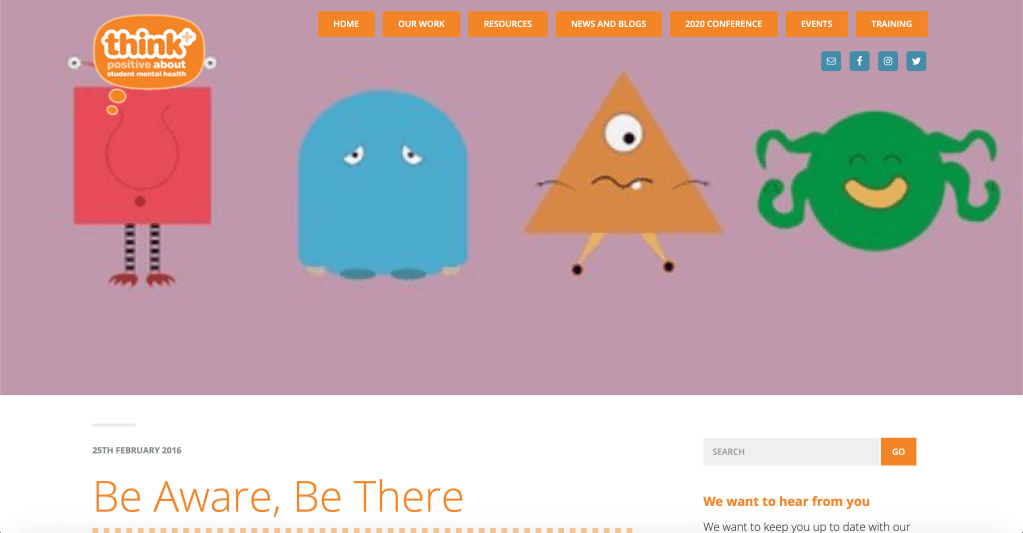
Students from the University of Edinburgh have launched a mental health and wellbeing campaign, Be Aware, Be There, encouraging peers to support each other. A small group of students started the Mental Health and Wellbeing Society at the university last year and are now pushing forward with this campaign hoping to remove the stigma around mental health.
The group recognise that mental health is an invisible illness and want people to know what help and support is available- including talking about it with others. Be Aware, Be There is supported by Fixers which has allowed the group to produce promotional materials.
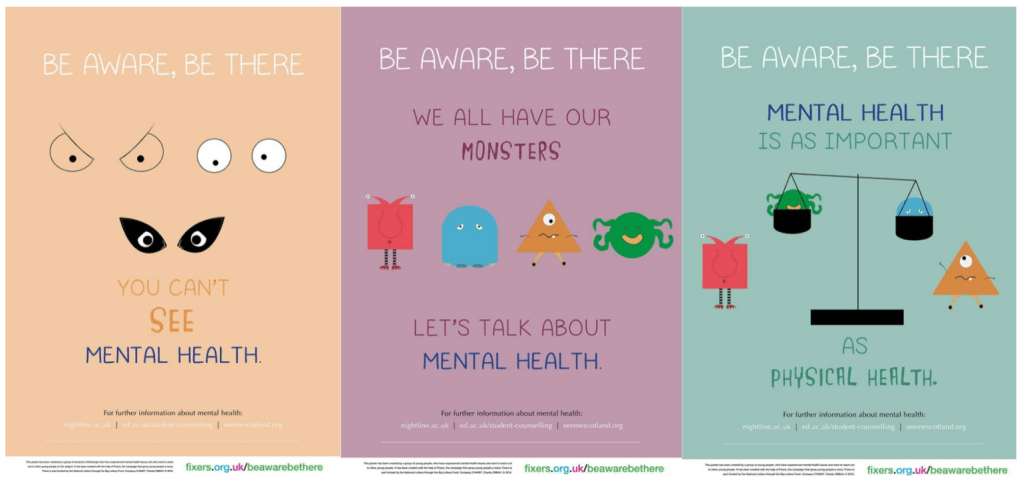
The campaign is one which definitely has a set aim to break the stigma around mental health and make students aware that everyone is prone to it and it shouldn’t be ignored, it takes a head on approach to the issue which makes it very clear to see the problem being outlined. It is also very clearly aimed at students and no one else, its a student to student campaign which could make it seem more relatable. However, although the student to student aim is very clear, the concept and design almost seems as though it would appeal to an audience younger than students with the simplistic metaphors and illustrations. It does however use slogans and colour well to make it feel personal and less corporate. The campaign is on all forms of social media which is something which will reach out to students especially, as generally students will notice something on instagram or twitter over a poster on a wall.
University Mental Health Day 2018 took place on Thursday 1st of March, it was the biggest University Mental Health Day to date, with the whole university community coming together to shine a spotlight on the importance of student mental health and wellbeing.
The community theme aimed to improve student and staff awareness of support and promote a sense of belonging, improve understanding of the role the environment and community can play in protecting student mental health and raise awareness of the specific challenges face and influence universities and health providers to work collaboratively so all in higher education can thrive.
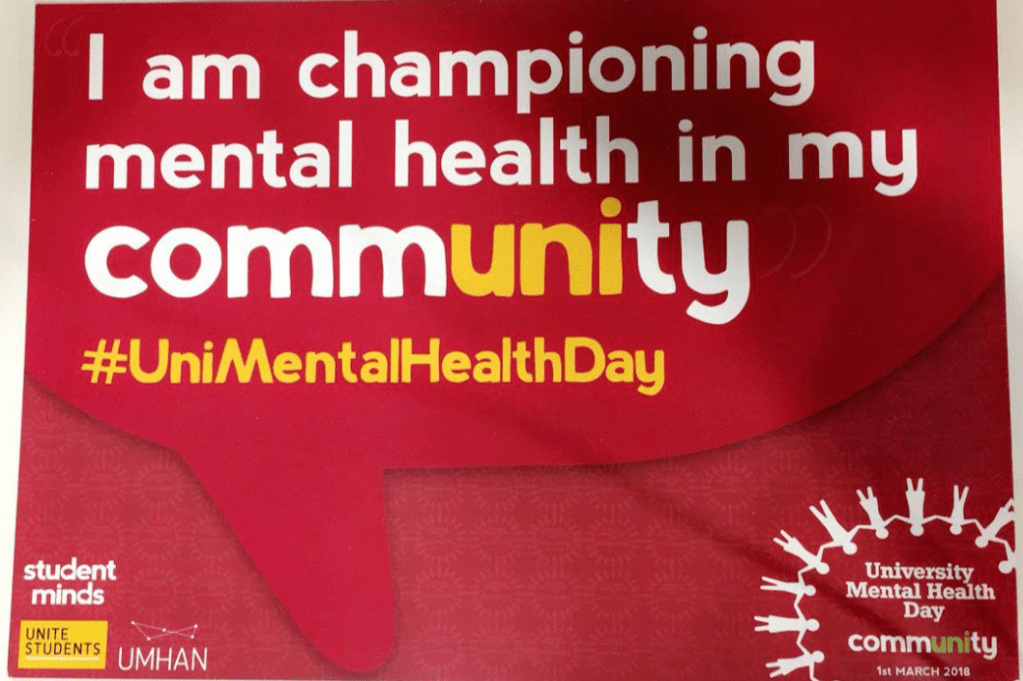
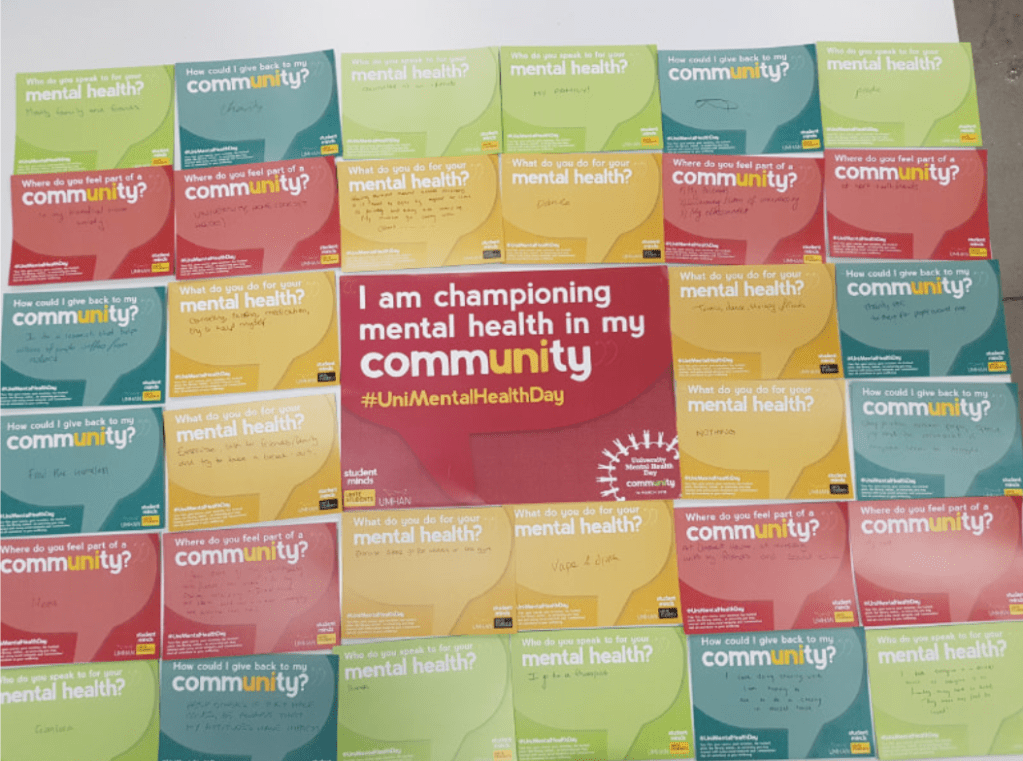
Student minds and their ‘University mental health day’ is aimed at all Universities across the country and encourages universities to ‘shine a light on the importance of student mental health’. Although the poster and leaflet designs shown above were definitely a focal point, a large portion of the campaign was taken online in the form of the hashtag on twitter, #unimentalhealthday and the hashtag reached millions of people nationwide. The campaign took a very different approach to the previous campaign. Still using bold colours, the approach is much more corporate looking and is definitely aimed at students but from the student minds team rather than a student to student basis. The Campaign still managed to reach out to lots of people, but again the idea of it being driven by a company and not other students is one which makes it much less relatable. Again the University mental health day outlines the fact that using social media is definitely a way to go directly to students and young people.

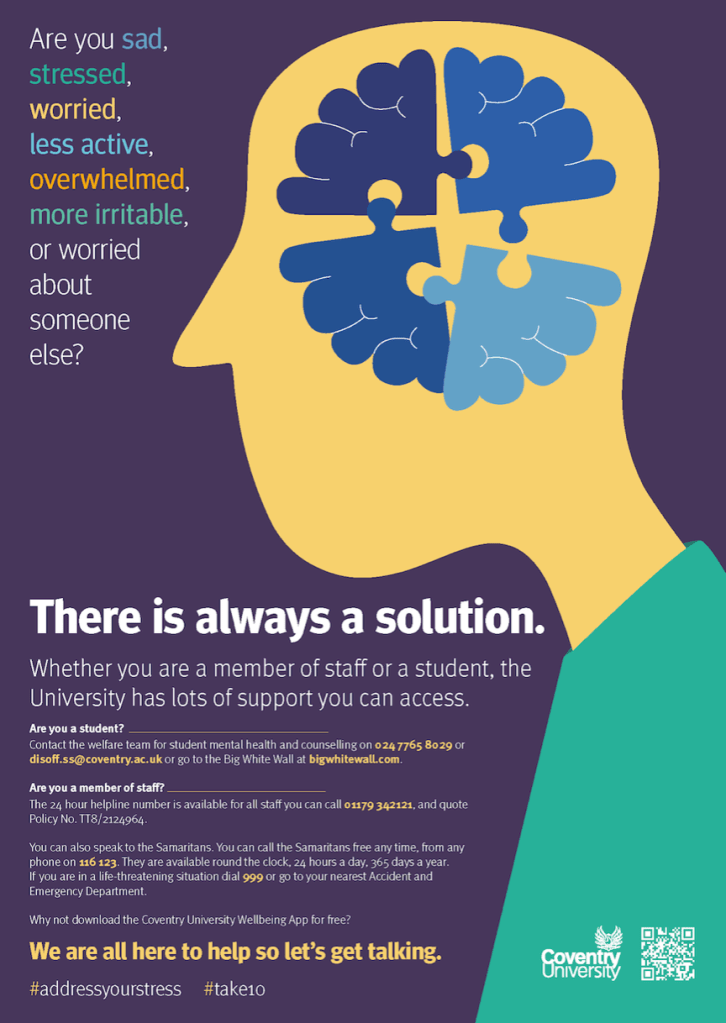
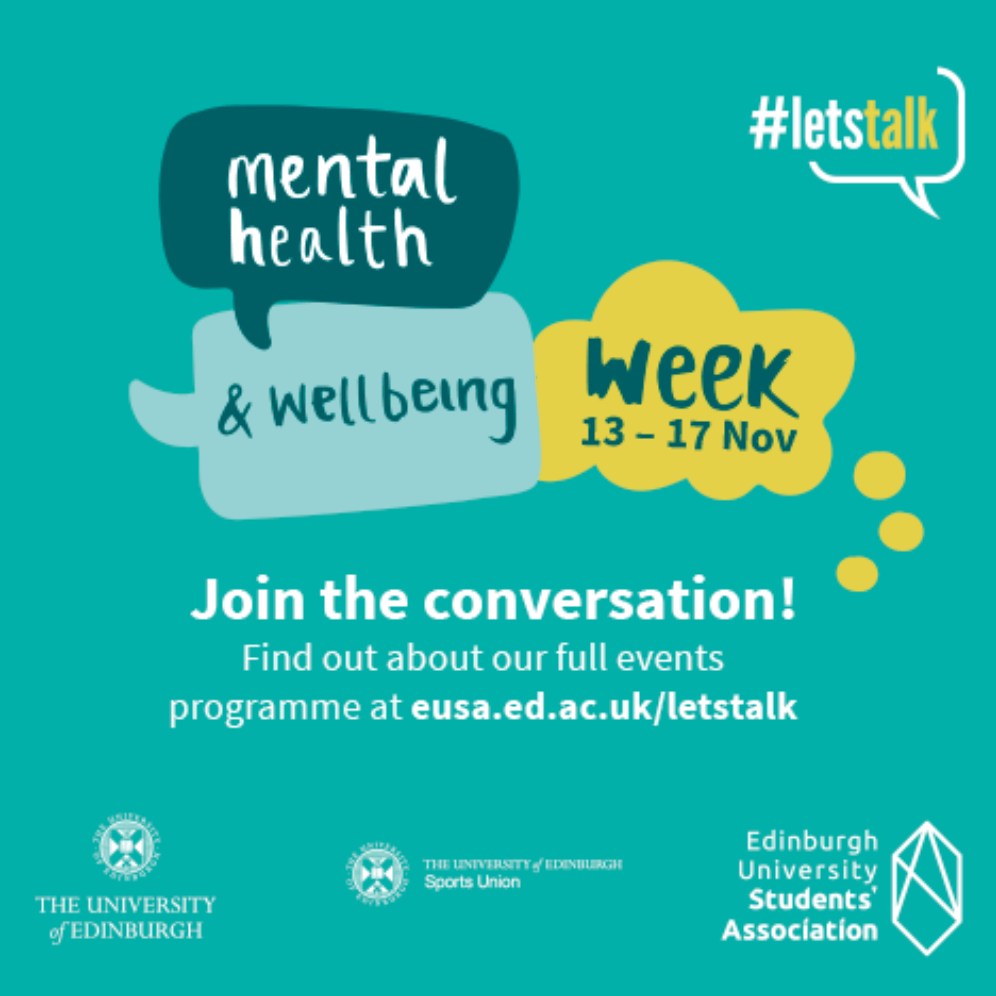

I also had a brief look into few other existing examples of Universities mental health campaigns just to take a look at the general visual language. Overall the majority of the examples I stumbled across were all very similar. Nearly all of them steer clear of any shock tactics.
The majority of the examples I viewed make good use of pastel like colours, keeping the tone of the work calm but also making it stand out more than a black and white example would. I also like the examples which use typographic elements and no imagery or photography. I think specifically in this brief there is no need for a large amount of imagery, the brief is to make students aware of where to go for help and I think a typographic approach works well in this case. I like the way some examples use speech marks and thought bubbles to hold important information and although they are very cliche in this topic, I think the idea of boxes of important information could work well. I also thin the examples which are very straightforward and to the point are much more effective in than those which use complicated metaphors or imagery.
After looking into some of the work I’ve also rules out some particular routes which I don’t think would work for the brief. Many of the campaigns use illustrative imagery and handwritten fonts in a way to make them feel more personal but I think in many cases it can come across slightly childish, relatable and personal design doesn’t mean it needs to be childish. Some of them also carry far too much information than is needed, the work for this brief needs to be something straight to the point to tell students where to go to get help and doesn’t need anything overly informative.
Contemporary examples
After looking into the universities examples of mental health I wanted to take a look into some modern day examples of mental health campaigns, particularly those which are aimed at a particular group of people, eg. students.
U OK M8? – Lad Bible
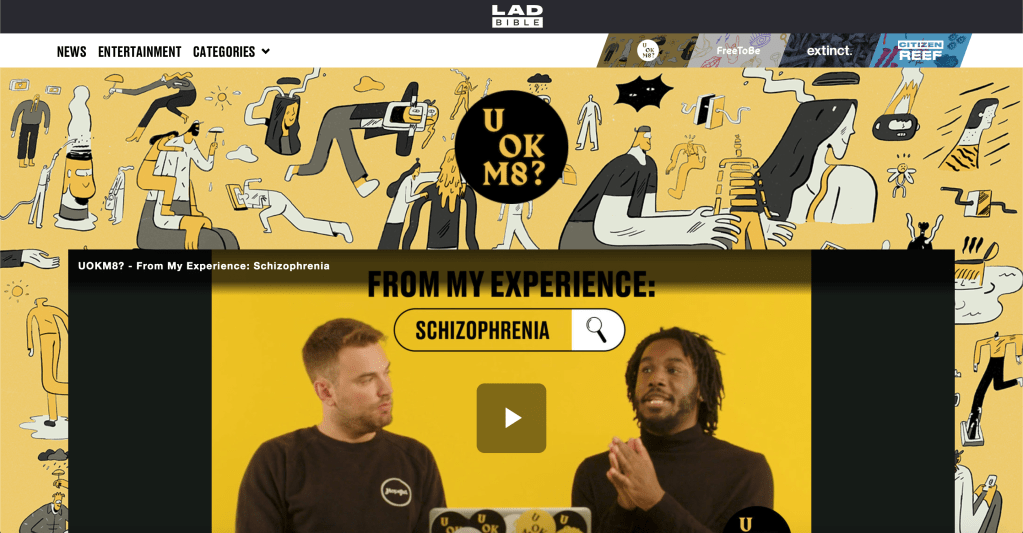
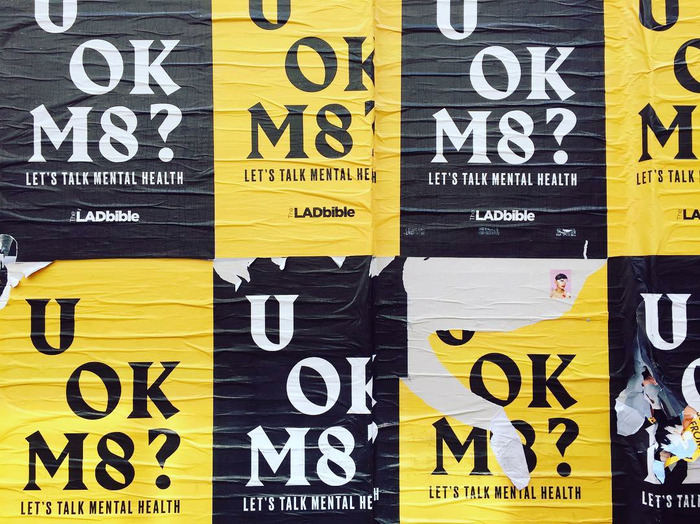
The social media page LADbible recently launched their campaign ‘U OK M8?’, a campaign aimed towards the mental health of young men.
‘UOKM8?’ aims to develop the broadest understanding of mental health and suicide risk in the UK by gathering quantitative and behavioural data from the LadBible audience through the use of questionnaires that sit alongside stories on mental health issues.
Although the campaign visual style is very simple, using only the black and yellow pallets and the same slogan across all of its media, the style is one which really stands out and is definitely aimed towards its target of young people. I also like the way the campaign is very straightforward and to the point. Theres no imagery or major metaphorical language, its simple and tells the viewer all they need to know.
The Mind Map
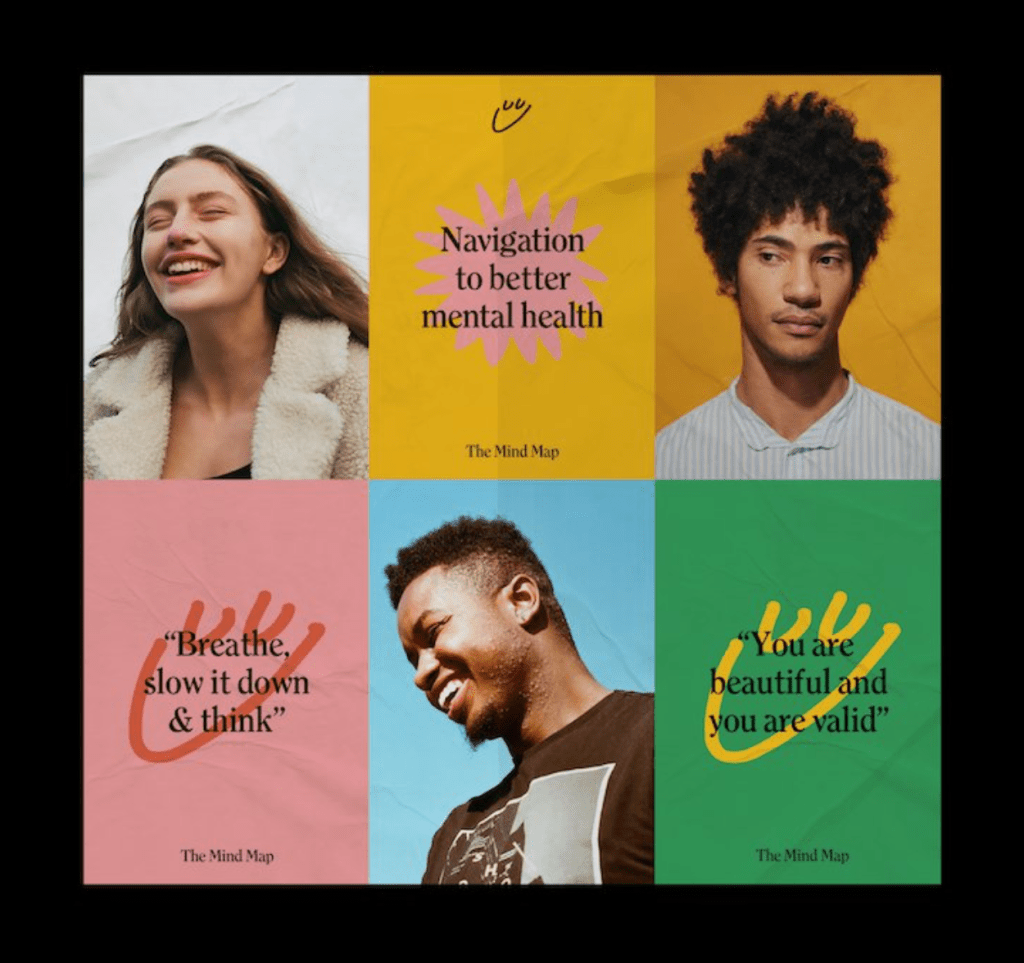
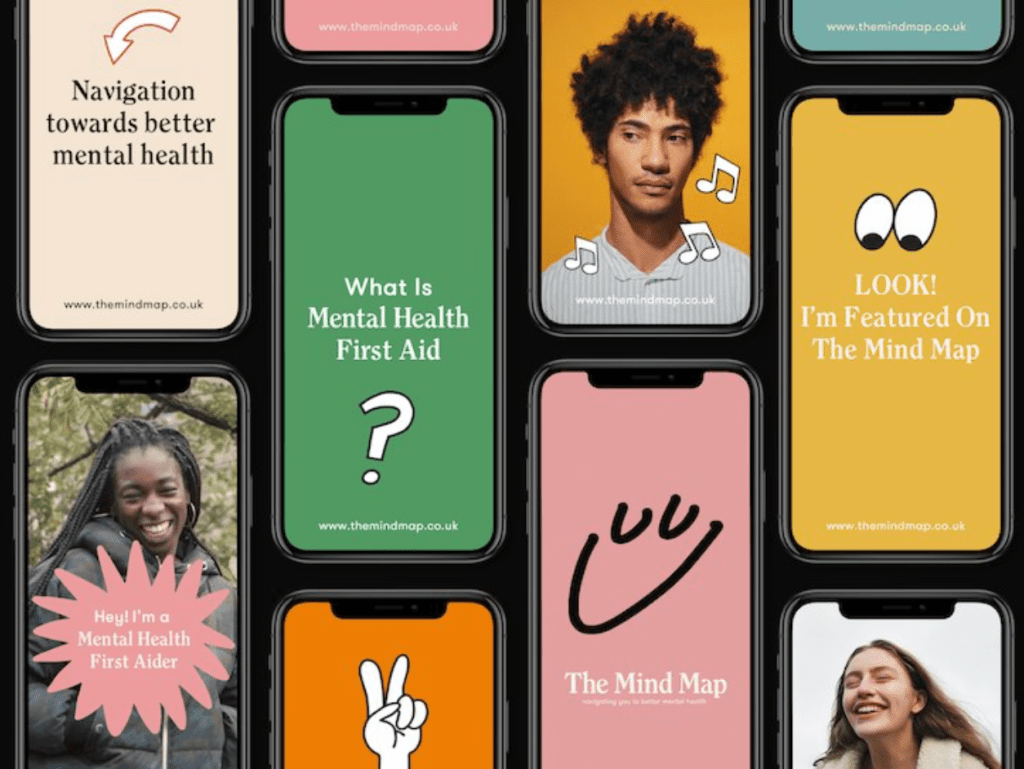
The Mind Map is a new initiative that seeks to “promote a new normal” in an age of increasing mental health problems across the United Kingdom.
Described by its founders as an “innovative mental health hub”, Liverpool-based Mind Map offers practical advice on how young people (defined as those between 16-30) can get access to subsidised counselling and free mental health support services, as well as an online publication which shares the stories of musicians and athletes who have been affected by mental health problems in their lives and careers.
Similarly to the LADbibles campaign, The Mind Map is aimed at young people (16-30) and its aim again is to allow them to connect with any forms of mental health they may need through the use of an app.
The visual style is great and uses a variety of stand out colour combinations along with some simple vectors and images to create a light hearted and friendly but also stand out approach to tackling mental health. I think the style really stands out to its audience and feels very relatable and personal as opposed to the usual cliche very corporate approaches.
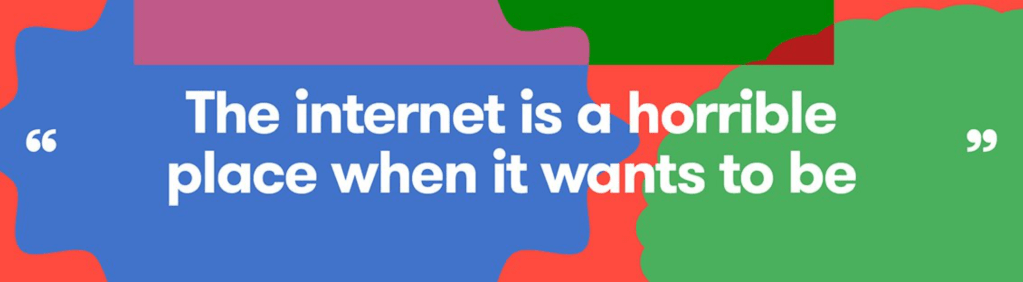
Graphic Design Is Mental
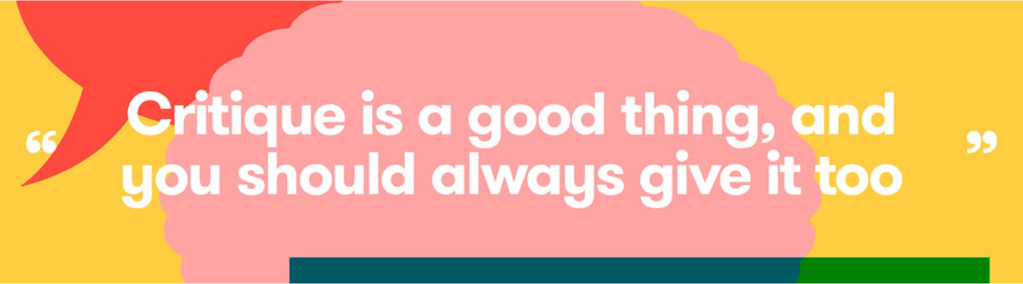
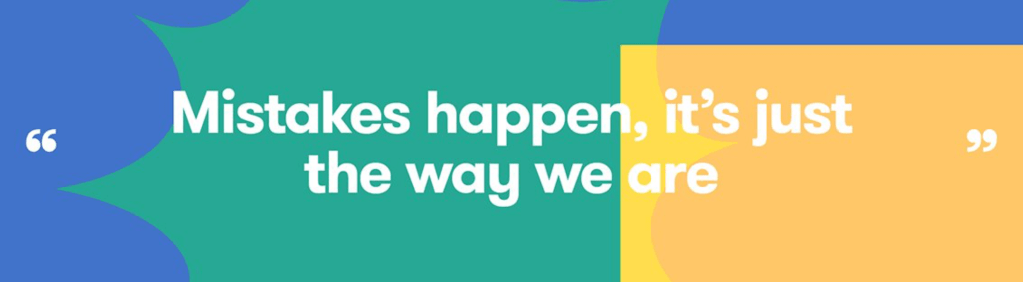
Ben Longden is the digital design director at The Guardian where he has helped to shape the title’s digital experience, working on some of the biggest news events of recent years, such as Cambridge Analytica and the Paradise Papers. Reflecting on his route through graphic and digital design, he has recently written a book, Graphic Design is Mental, which he is currently funding here.
I discussed previously that I like the idea of the thought marks and speech bubbles but felt they could be stylised slightly more to make them less cliche which is exactly what these banner designs do. The use of the bold typographic slogans alongside the coloured backgrounds really makes it stand out, and again its very straight to the point in it’s message.
Thoughts
Taking some of the positives from the university campaigns alongside those from more contemporary examples has given me a variety of different points to think about and has shown me what works and what doesn’t in terms of the designs and the media they campaigns use.
 Ben Jackson