Brief
Sphere Sport Healing Rehabilitation
My brief, given by an organisation called Sphere, is a rehabilitation project aiming to aid people with psychiatric disorders such as depression, anxiety, bipolar disorder etc. using physical exercise. The programme looks to achieve this by improving their quality of life, health and wellbeing. The programme is a collective of 7 partners from around Europe, based in Finland, Croatia, England, Wales, Germany and Belgium, and are a combination of organisations and professionals from academia, psychiatric services, local authority sports development and third sector physical activity providers who all informed the SPHERE project through research and their own examples of best practice within their designated field.
The brief is clear that the project being given to us is to communicate a set of 17 guidelines which aim to provide information about how implement physical exercise to increase mental health. The aim is o provide the information/guidelines to a range of professionals such as physiotherapists, psychiatrists, mental health nurses etc. in order for them to pass this information on within their own practice in a creative and attractive way.
The primary target audience includes a vast range of professionals within medical services such as mental health nurses, physiotherapists, psychiatrists, occupational therapists etc. Although the target audience given to us by Sphere is the professionals themselves, It’s also important to consider the secondary audience, the patients receiving the guidelines, as although they aren’t the main focal point for the work, they’re ultimately the people gaining from it.
Its clear from the brief that the client want the guidelines to be designed and put across to the viewers in a creative and accessible way, something clear and concise. They haven’t specified exactly what mediums they want us to use, so anything from a simple poster to an app or website will work.
6 Frames
To get us started, we used the 6 frames method to unpick and answer questions on the brief and help us outline possible design opportunities and to learn more for the brief.
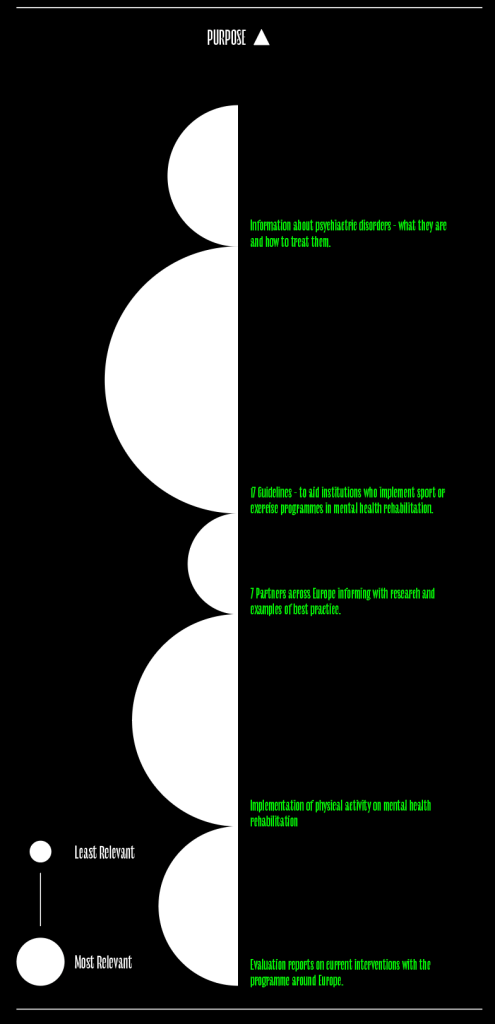
Purpose
There is a few different takeaways from the brief;
Information about psychiactric disorders – what they are and how to treat them.
17 Guidelines – to aid institutions who implement sport or exercise programmes in mental health rehabilitation.
7 Partners across Europe informing with research and examples of best practice.
Implementation of physical activity on mental health rehabilitation
Evaluation reports on current interventions with the programme around Europe.
One of the noticeable mentions from this frame was that all of the takeaway points from the brief vary in levels of relevance to the final design, for example the 17 guidelines are of much more important to the outcome that the 7 partners and who they are.
Accuracy
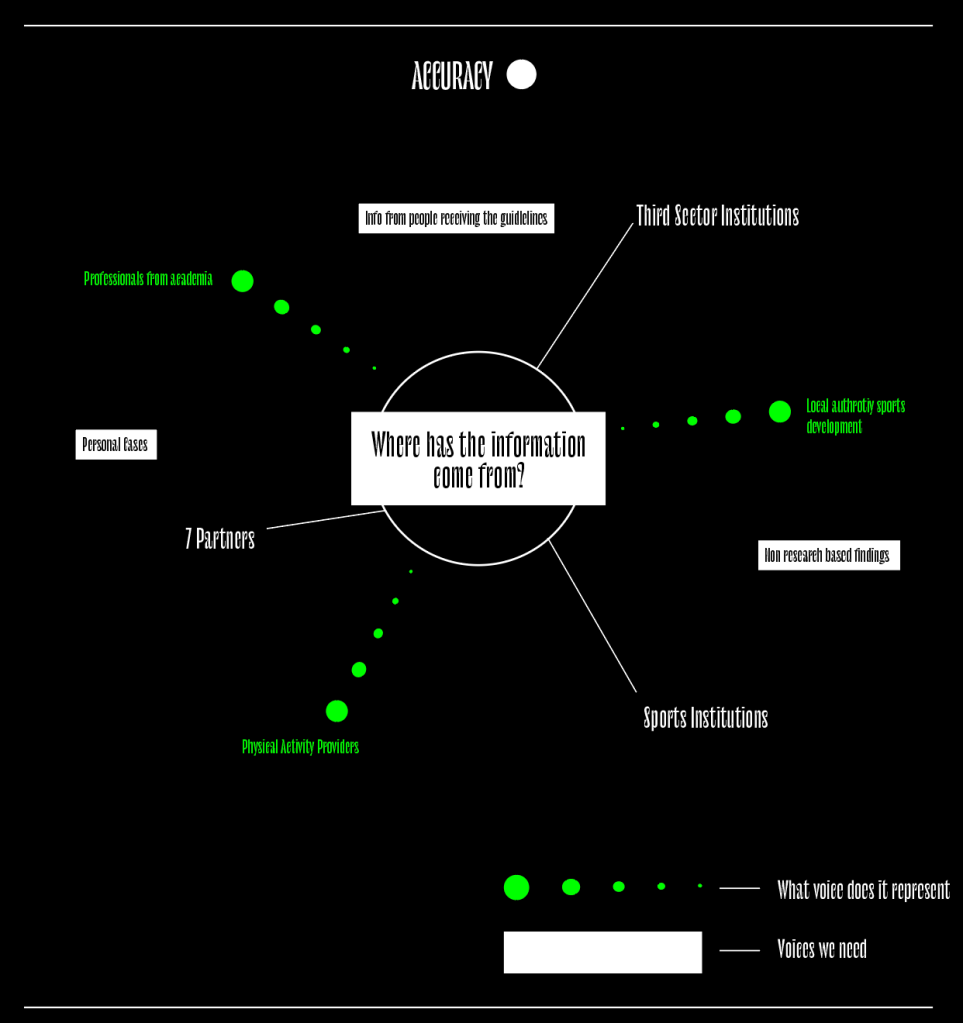
The information has come from a variety of different companies and sources ranging from 7 partner companies to mental health institutions to sports organisations. It represents these companies and organisations and their research as well as the voice of the patients suffering from psychiatric disorders.
However, there are a few people who’s voice and point of view are not being represented, like the personal cases and opinions of people who have been through this kind of thing in the past.
Point of View
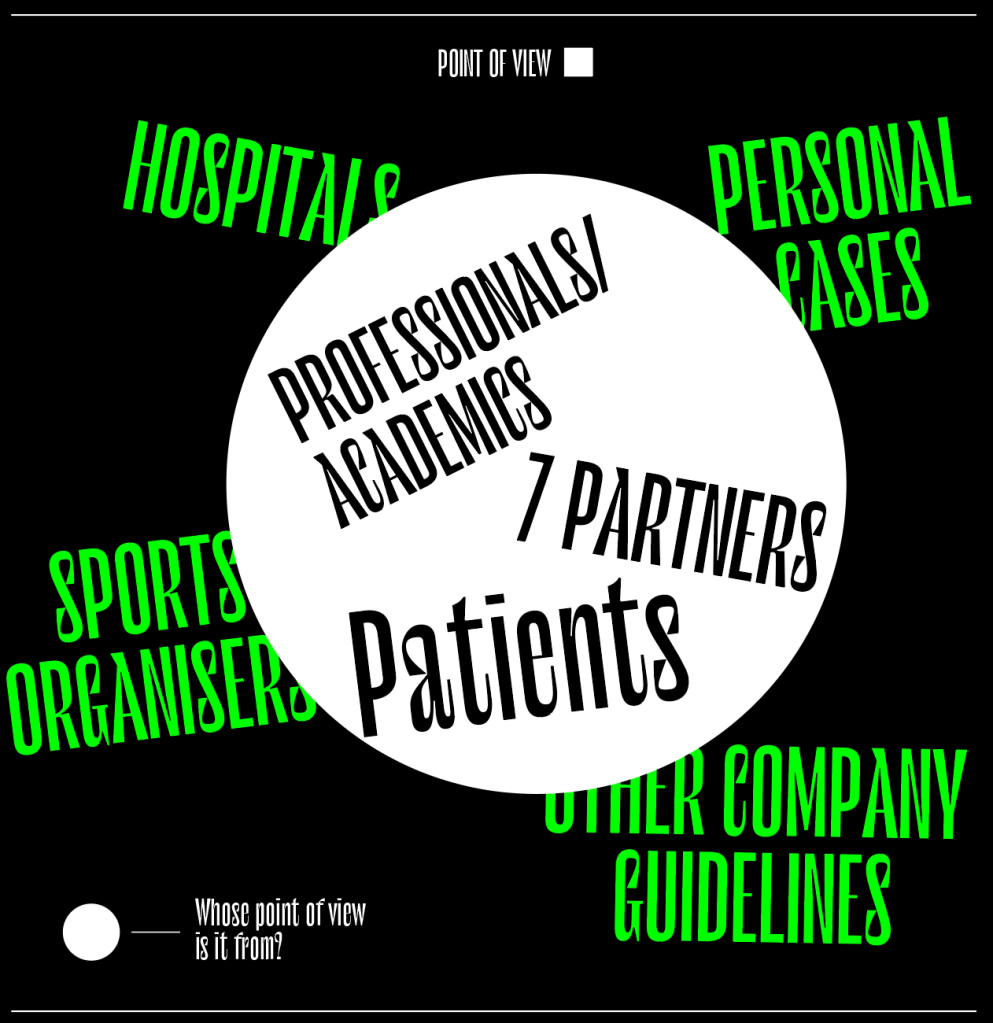
Similarly to with accuracy, there’s a difference between the information we know and use and the information which we don’t have. It still seems to be the problem that much of the information we have been given is specialist information given to us by professionals with not enough care going into how the patients will actually feel about the guidelines and exercise.
It feels like although the information is very science and fact based, maybe going down a more personal ‘friendly’ route might be something which is more approachable.
Interest
Coming into the project I knew from the start that exercise increases mental health through endorphins etc, however the most important thing for me was some of the information I didn’t previously know about, like the best timings to do exercise and where to do it.
I think it stands out the most to me because if myself and my group were unaware of this information, its likely that most other people will too and so it’s probably something which needs to be focused on.

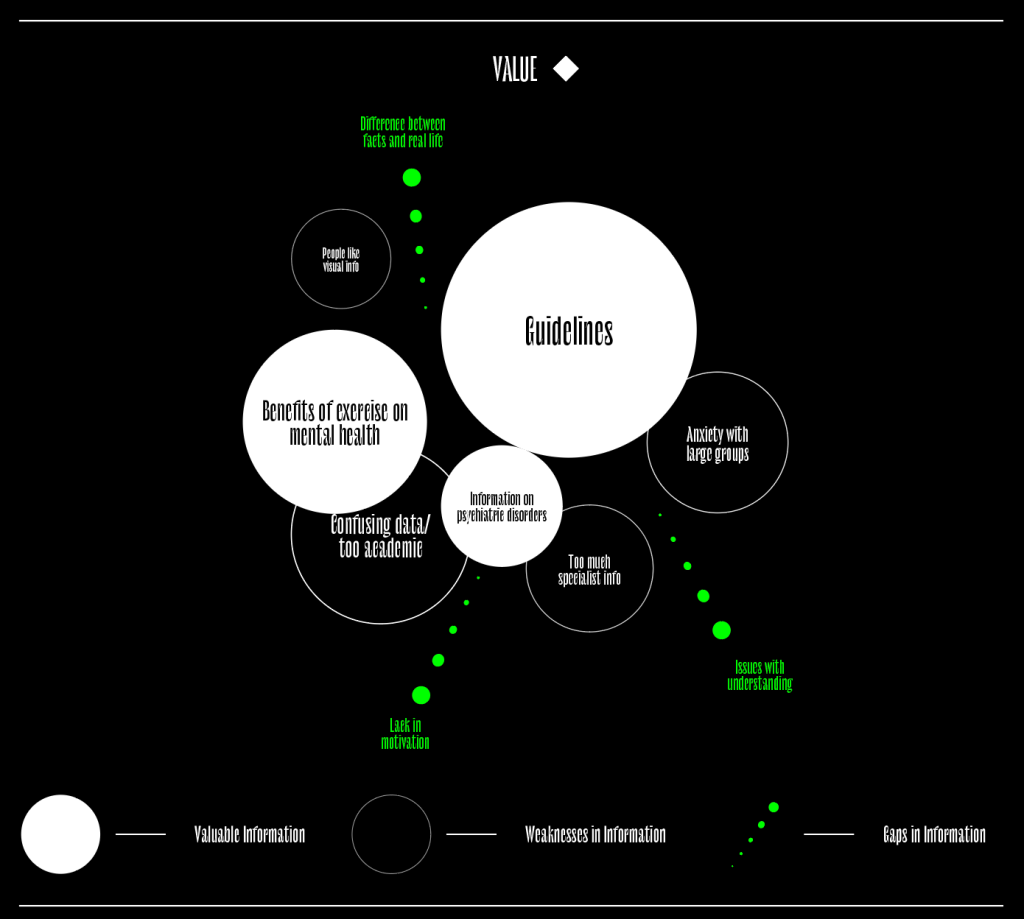
Value
Again this frame was just outlining the most important information and therefor pointing out what the basis of most of the design will be
Things like the guidelines and the science behind it all will most likely be what most of the design will consist of.
Learnings
The purpose and value frames are the two which stood out to me more than anything, they offer the most clarity over how the brief can be answered.
Looking at purpose shows the ways in which the information given in the brief, as well as the guidelines, can be sorted in their relevance sand importance, which in the case of having 17 guidelines is important as it might allow me to focus on the more important guidelines over the more irrelevant ones.
The value frame, similarly, highlights the more important information and filters out anything which is less relevant. Looking at the value infographic it makes it clear that the guidelines will be the most important part of the outcomes, with other information and facts coming as extra information.
The important thing now is getting the information across in the right way. Whilst the client wants the information in a creative, clear and concise way, I think its also vital to remember how much information needs to be conveyed so the right means will need to be used to convey it all;
Booklets, Leaflets etc (print) – Allows me to get lots of information across in one document
E-learning/presentation –educational learning programme to teach a range of professional about the guidelines
Lanyards – For professionals to wear with constant reminders of the guidelines
Website and app – Somewhere all the guidelines can be accessed, alongside any extra information the professionals might need
Social Media – Raising awareness to a broader audience
 Ben Jackson