Design As Activism – Video Development
After deciding the base of the video, what I wanted the beginning, middle and end to look like I then worked on adding some stylistic elements to make the video more exciting to look at and draw the eye of the viewers.
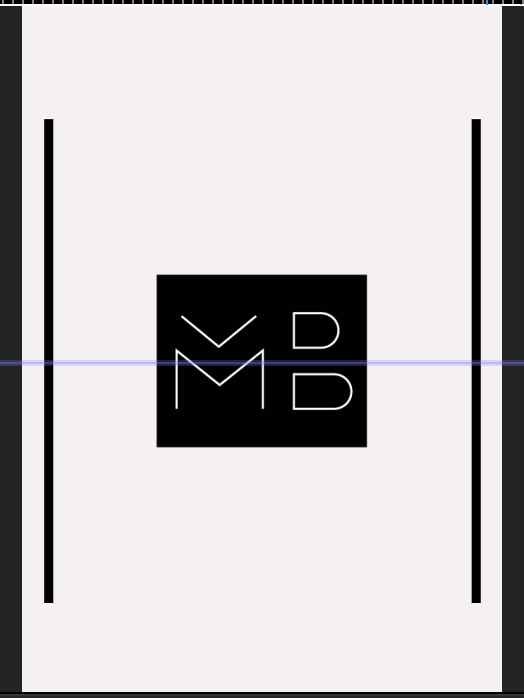
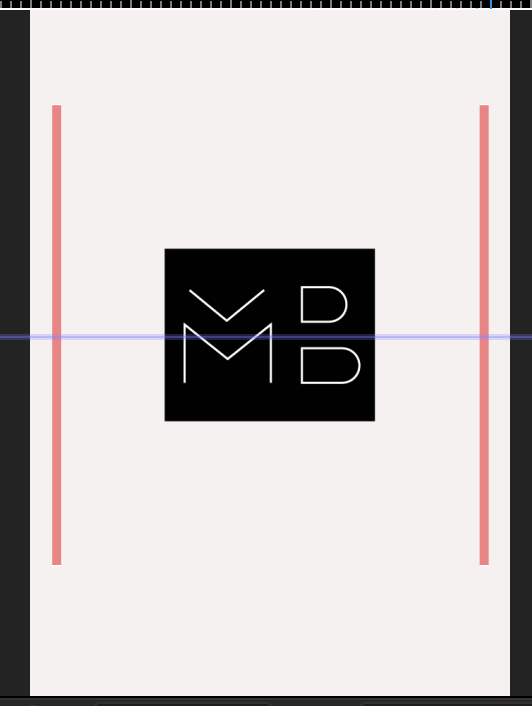
The first element I added was right at the beginning of a video, I wanted to add 2 lines which start in the centre of te page and extend upwards, almost opening up the video when the viewer clicks on it, I think it’s effective in drawing the viewers eye. I tried it in black and red and decided to go with the red, as the whole purpose of it is to catch the viewers eye, I decided making it red will do this more effectively.
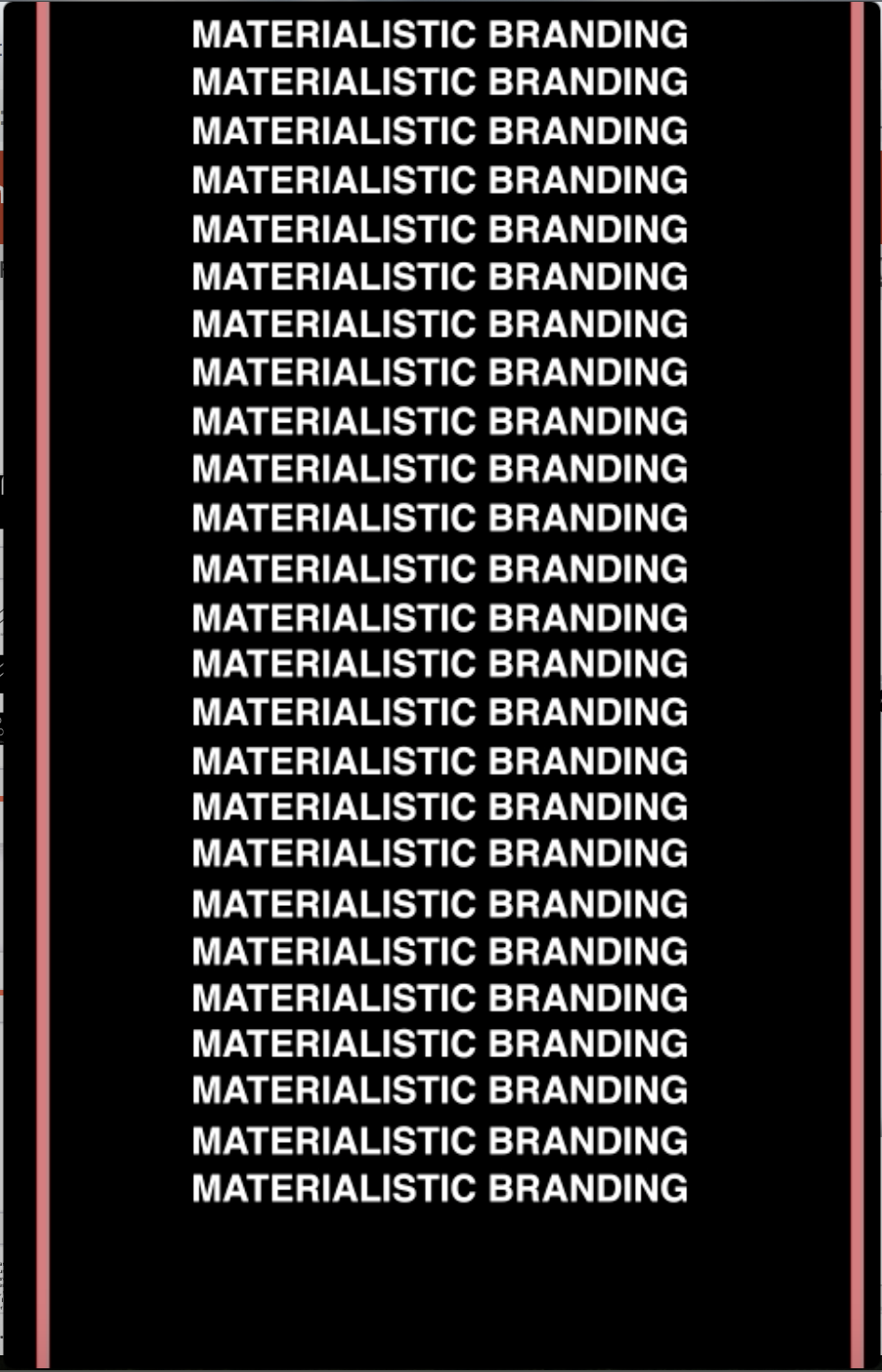
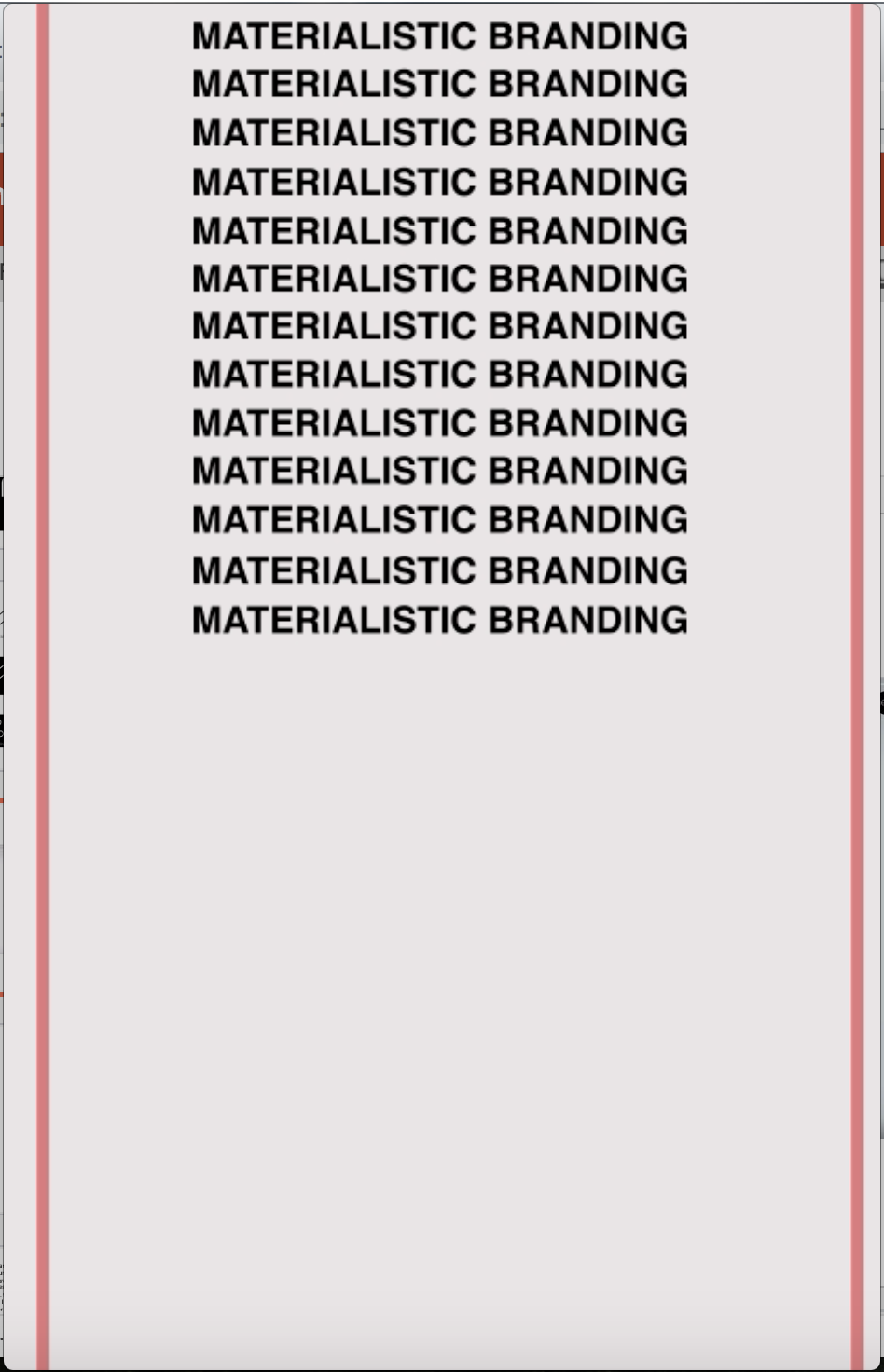
I then wanted to add another feature of the name of the campaign almost swiping up the page before changing colours and coming back down the page. I added it in just after the logo at the beginning and just before the logo at the end just to add a visual in to keep the viewer interested and stop them from clicking off the video.
I think both of these elements are effective for their purpose, they don’t have any hidden meanings about the campaign but as I noticed in my research into Instagram adverts, they often just add elements in like these which just give the viewer something ‘nice’ to look at which keeps them interested and stops them clicking off.
Design As Activism – Initial Ideas
Firstly I took photos of an array of clothes, making sure I had two items of clothing that looked very similar. I used photoshop to cut them out, edit the colours slightly and add a shadow behind. I did this for a range of different items of clothing, jumpers, t shirts, shirt, coats etc.
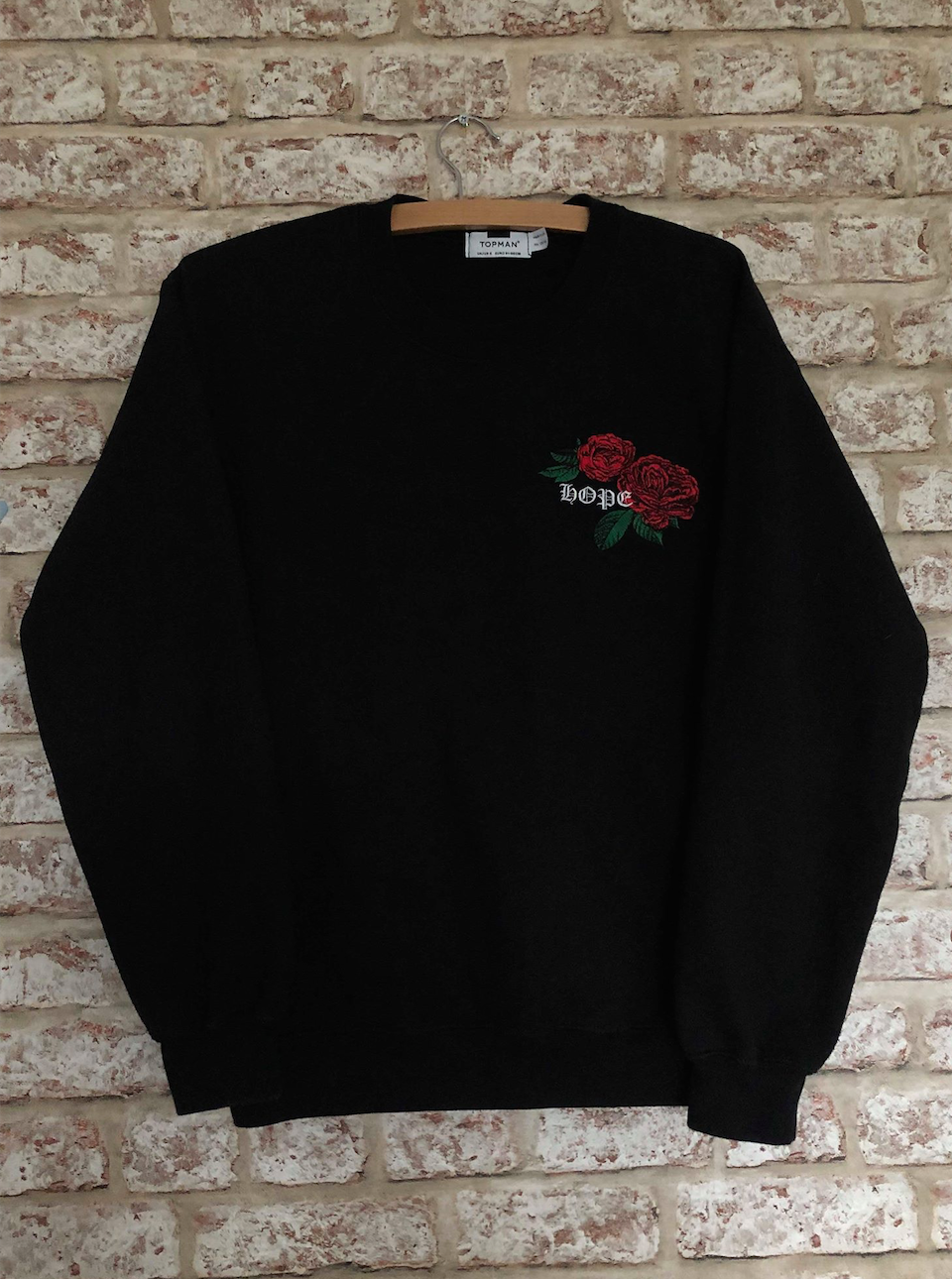
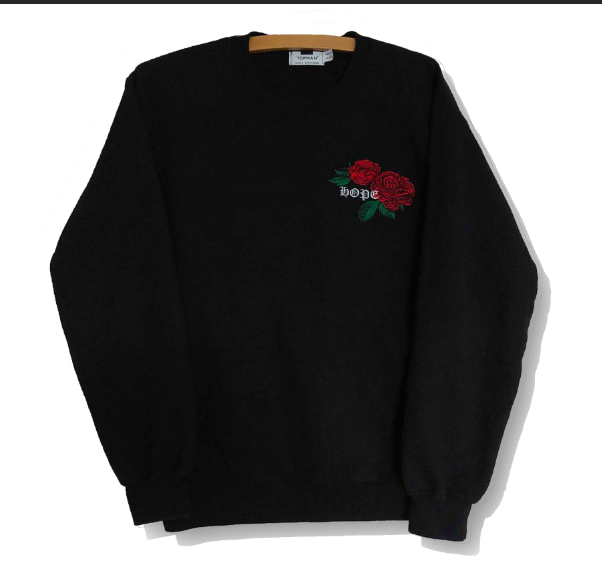
Before starting the video I drew a few rough sketches of possible ideas for the overall aesthetic of the video. As I stated in a previous post, I wanted to keep it simple and minimal as I think that will add a contemporary feel to it. I kept the background white and wanted all the text to be either black or white.
Taking influence from my sketches I then used illustrator to create mock ups using the images of the clothes.
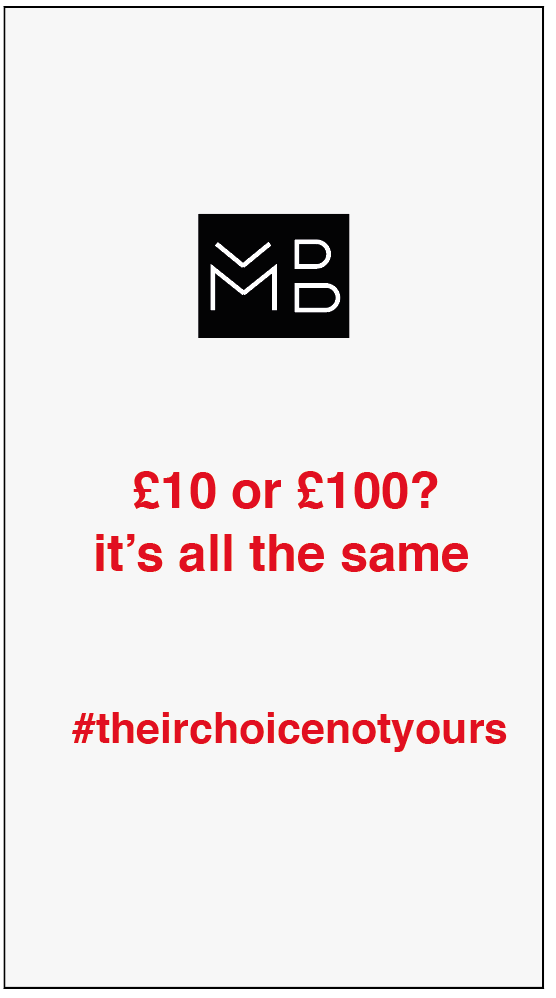
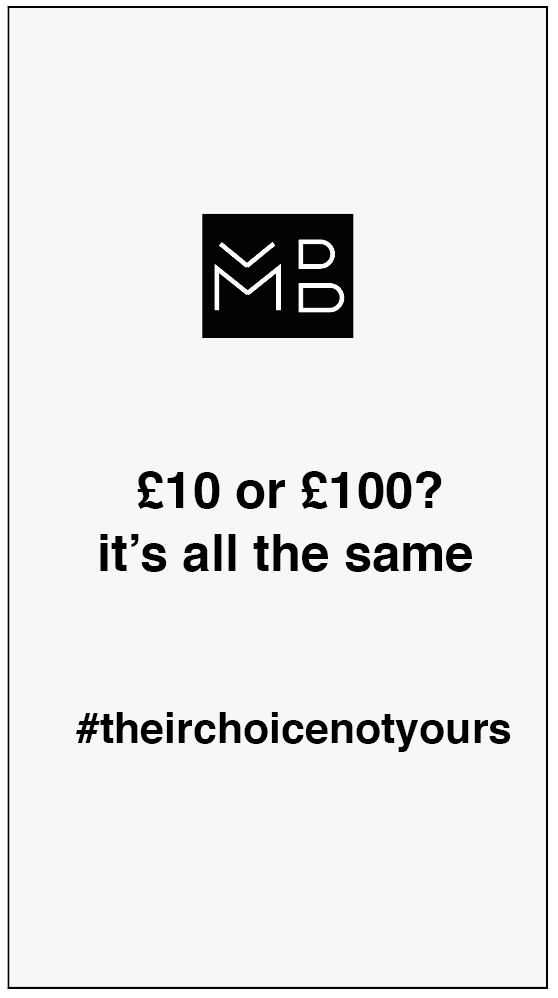
The first design I wanted to look at was the end of the video as I think this is the time when people will realise what the video and the whole campaign is about so it has to show the message very clearly. Although the image in the middle is very minimal and fits the style I am looking for, it doesn’t have a strong message conveyed like the other two so still doesn’t really explain the video. The other two have a strong punchline at the end of ‘£10 or £100? It’s all the same’ which I think sums up the entire video and hopefully is a way to make people realise and think that all the clothes they’ve just seen are actually very similar in the way they look. Both are strong and although I want to incorporate some red into it I think the black looks more contemporary in this instance.
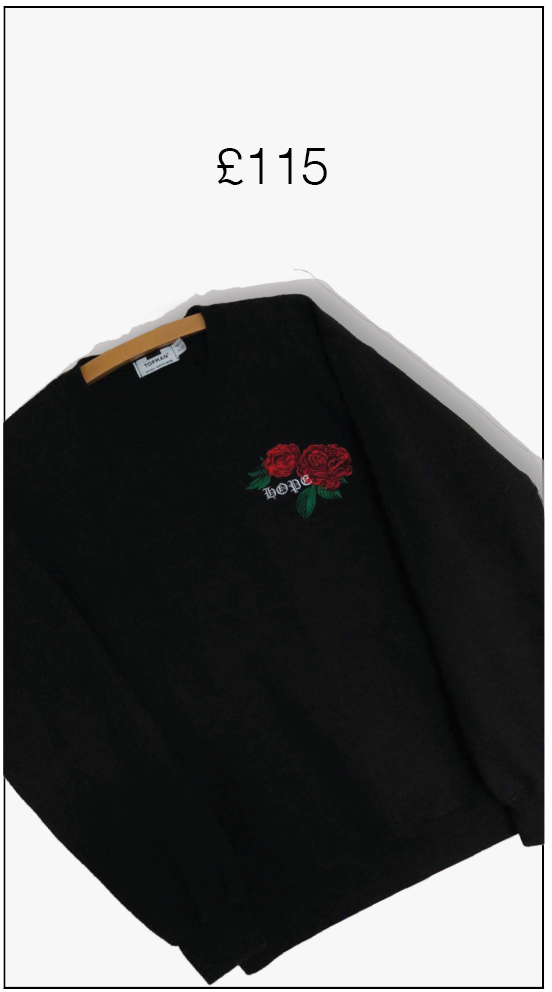
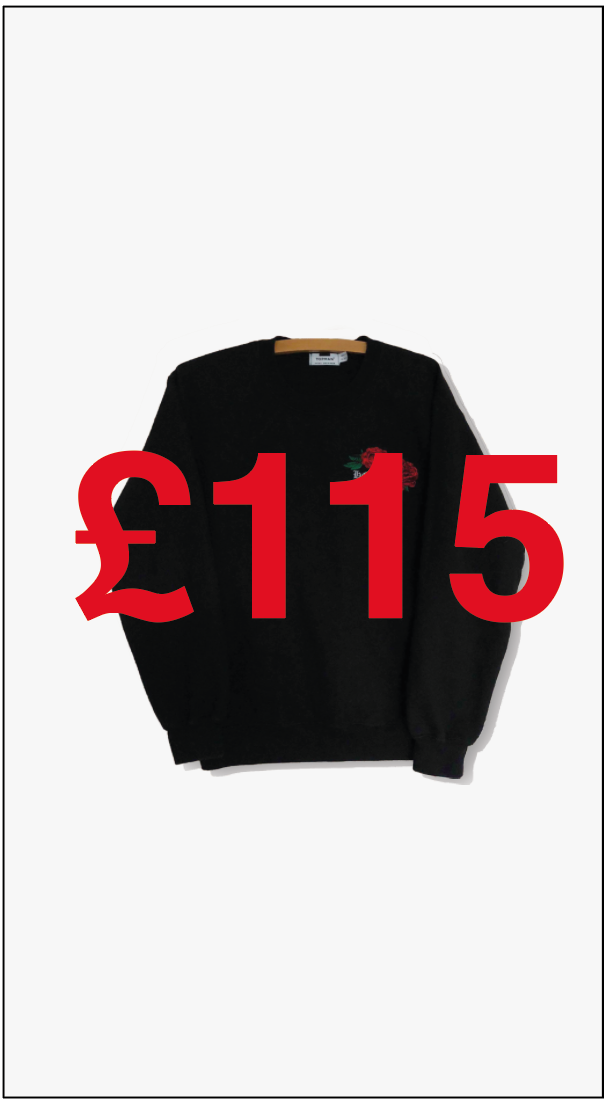
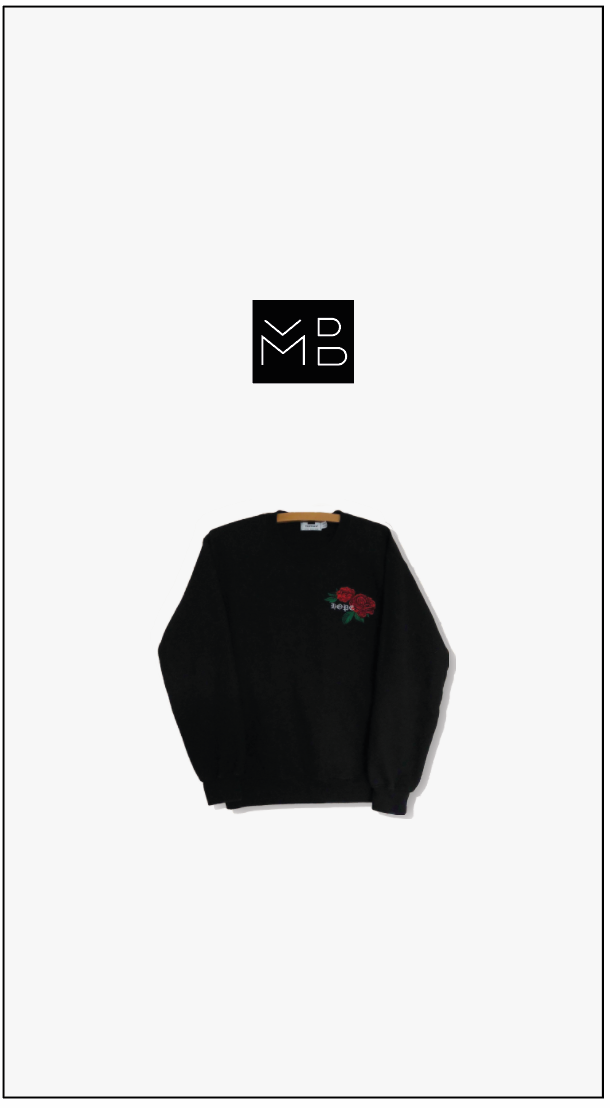
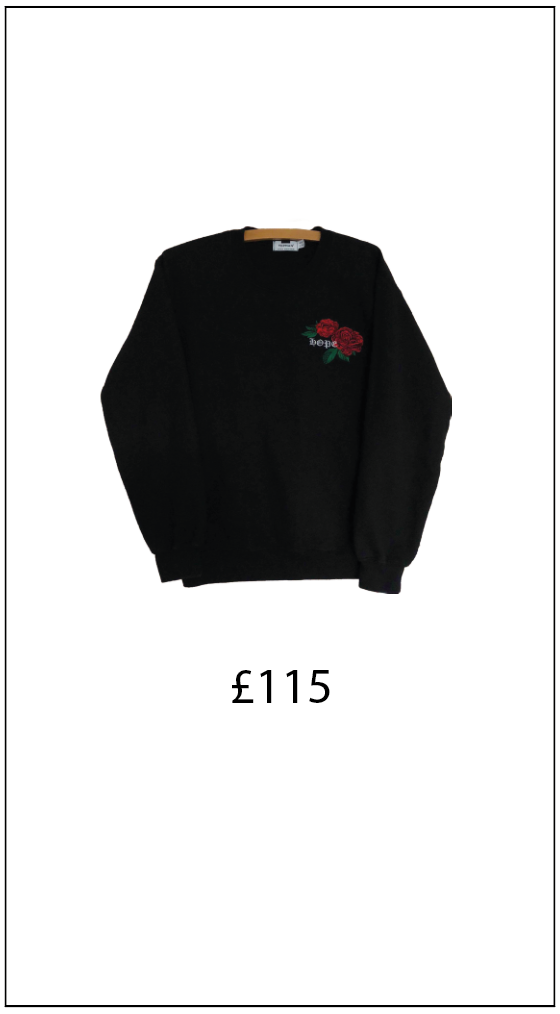
I then did the same for the middle portion of the video which displays all the clothes. I wanted to keep the same theme of it being simple with the clothes being displayed in the centre of the video and a price on screen. Although I like all of the outcomes, I think the most effective is the larger mock up. It’s simple but effective and does everything it needs to do, each item of clothing will only pop up on the page for about a second so I don’t want to overcomplicate it by adding anything other than the price. I also like how everything is centred and looks clean and minimal, the price is also in black to match with the black logo and black text at the end of the video.
Design As Activism – Storyboards
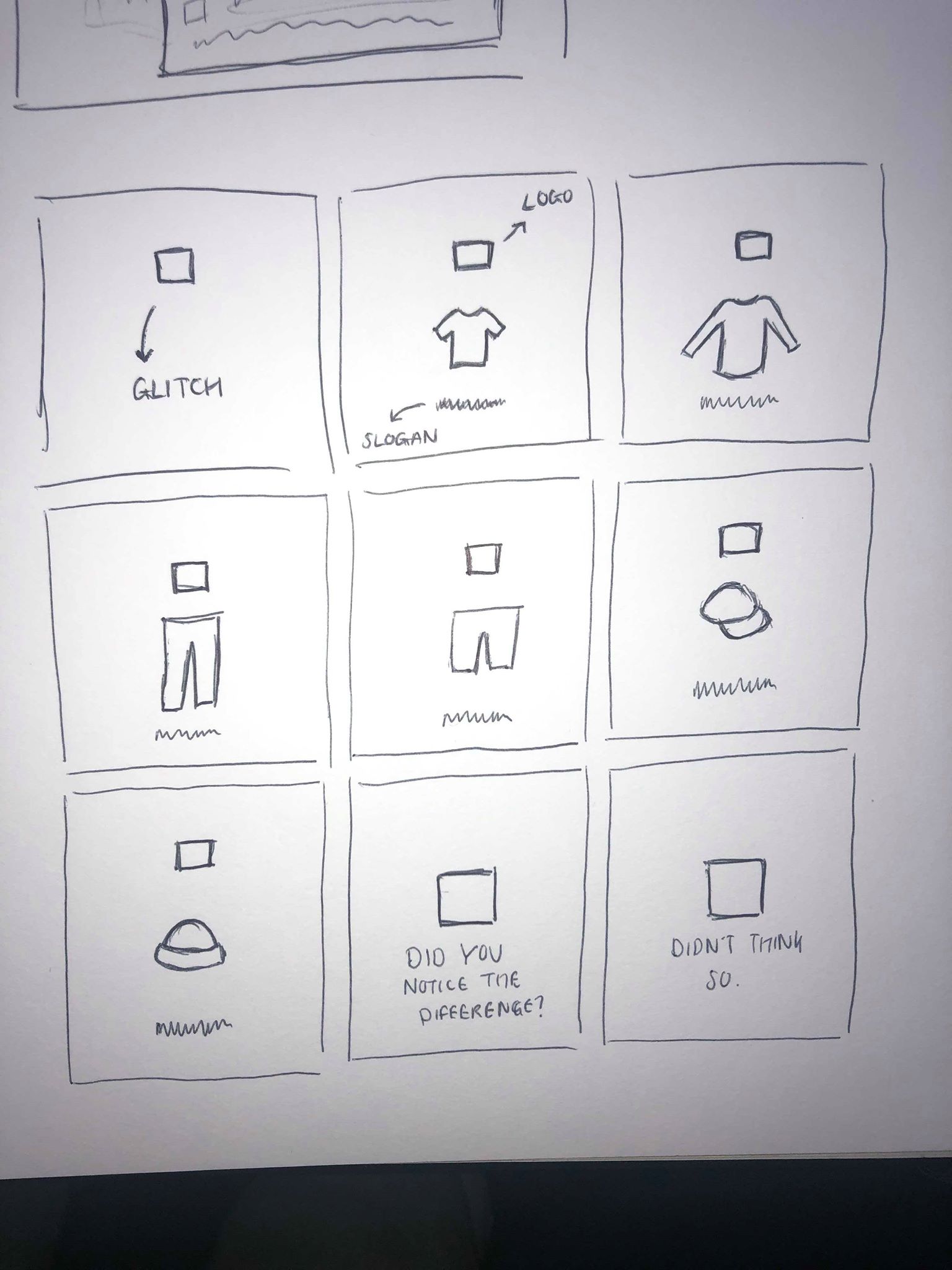
Before creating the video I looked back at a sketch of a storyboard which i drew at the beginning of the project to give me a rough idea of how I wanted it to look. Although some areas of it I don’t think are effective, for example now we have chosen to stick with the idea of a clothing brand, the last 2 frames aren’t effective in showing off the clothes. I wanted to experiment more with what the text would say at the end as well as what would be on the screen at each frame, whether it be just the item of clothing, or with a logo/slogan. I also wanted to add a few other elements to it to possibly incorporate some red into it to make it stand out a bit more.
Following on from my research into existing adverts, I thought more about the overall composition and thought about any changed I wanted to make. I made the decision that after the logo fades away, the clothes should start popping up on screen instantly to make the most of the time. I wanted the clothes to change relatively quickly alongside their prices. My first thought was that my initial storyboard starts and finishes with the logo and a small amount of text which, from my research, I gathered was the most effective way to make it look. However, the sketch looks to boring as it is and needs something to make it more exciting to look at.
Design As Activism – Research
My role in the group was to create a video to advertise our campaign. I wanted it to be a short clip which briefly summed up our campaign and would make people want to read more about it. Firstly I researched into what social media platform is most viewed as the more people viewing it the better. I found out that among teens and young adults, 76% of them use Instagram whereas only 66% use Facebook. Because of this I decided to make a sponsored video which would pop up as the viewer is scrolling through their ‘stories’ on Instagram.
I then looked at existing sponsored videos on Instagram to see how they’re structured and designed.
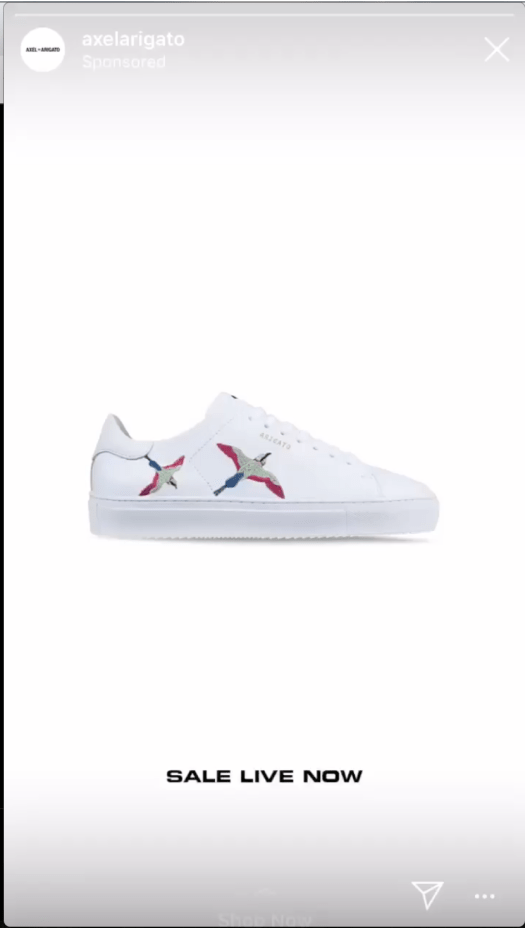
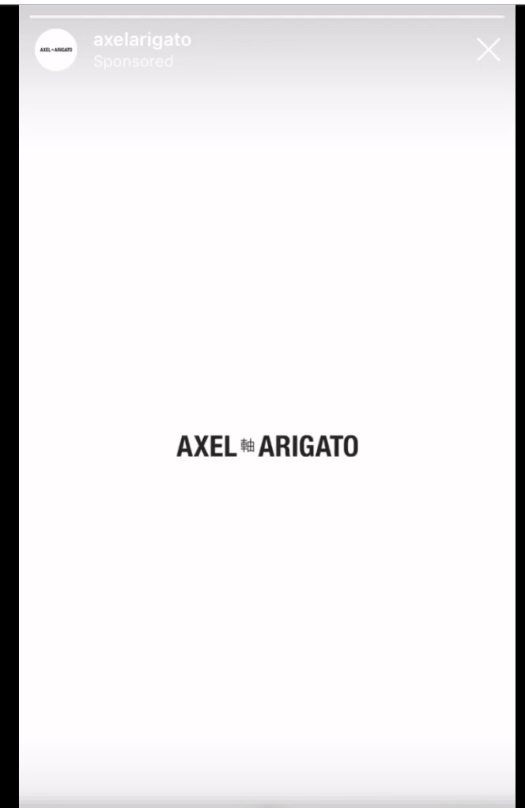
Firstly I looked at an advert for a clothing brand to see the way they style the advert, as well as how they show the clothes. The advert is kept very simple, with a plain white background and black text. Each item of clothing pops up on the screen for about a second before moving on to the next, it gives the viewer enough time to see it but not too much time that the viewer will stop looking. The clothes are then followed by a plain frame with just the logo in the centre, keeping the minimal and contemporary look. The videos are only about 20 seconds long so the content comes and goes very quickly, not giving the viewer much time to see each frame. The text generally appears on the screen and disappears at the speed the viewer would read it.
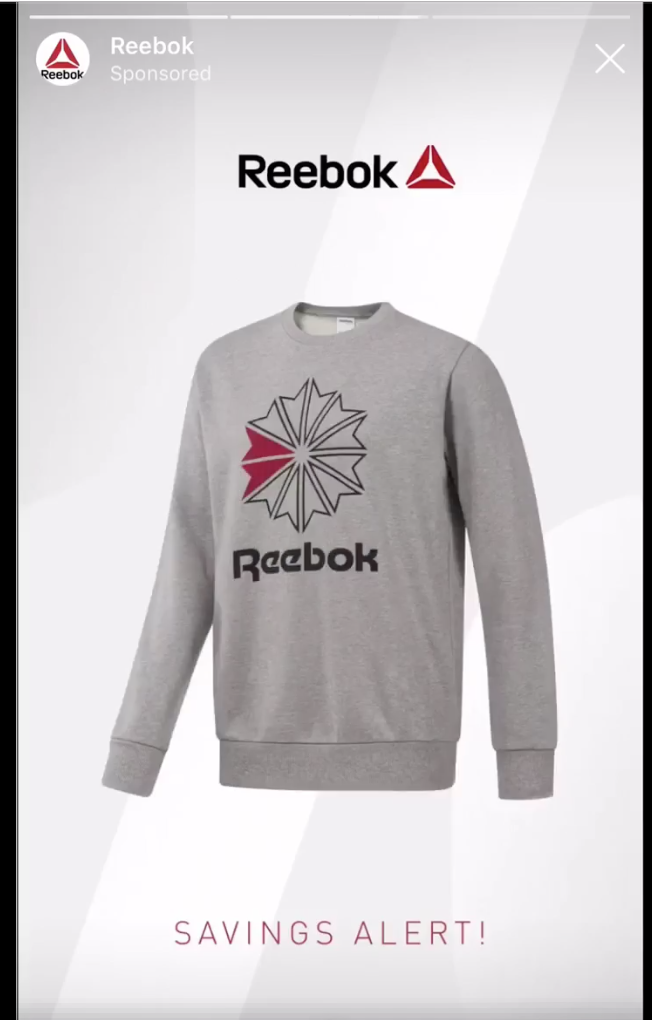
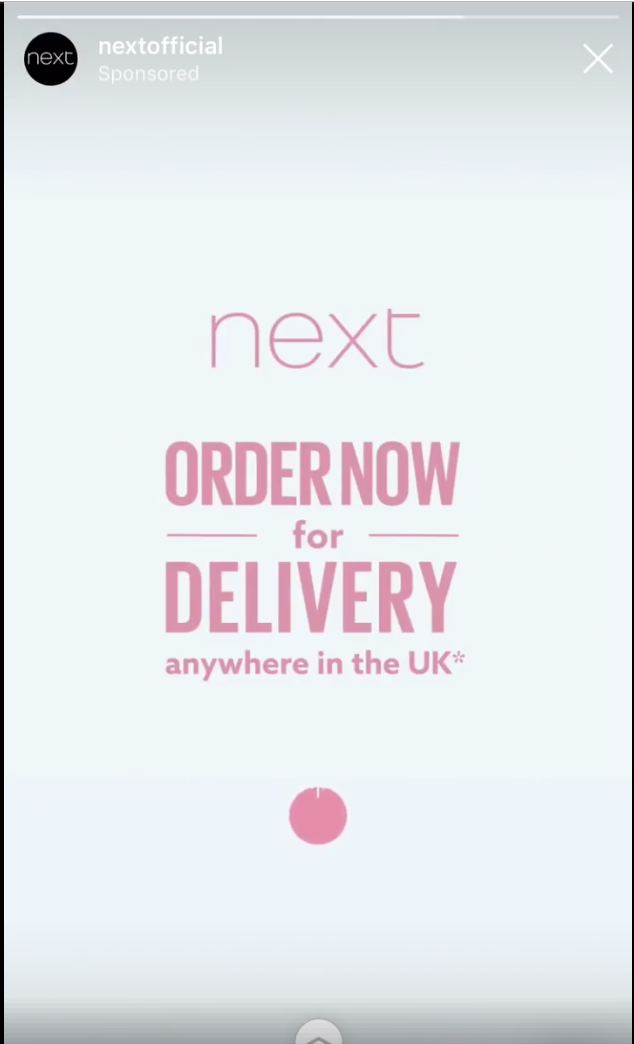
The next adverts I looked at were also for clothing brands, both had a very similar style to the previous advert, with a very light background. The clothes pop up on the screen in the same way, not staying in frame for longer than a second. Just like the previous advert, after hr clothes are all shown a relatively plain screen appears with the logo with a small amount of information. I also noticed each advert has a ‘swipe up’ icon which bobs up and down slightly towards the end of the video.
Overall I took lots of inspiration from all of them, especially the ideas of light colours and a limited colour palette to keep it modern and contemporary. I wanted the first and last frame to be simple and minimal, consisting of only the logo and possibly our slogan.
Design As Activism – Idea Development
After deciding on how to communicate out idea and designed our logo, we thought about the best ways to produce our outcomes. Although we knew we wanted to use the idea of a ‘clothing brand’ to create our outcomes we weren’t sure on the best way to put our idea across. We were unsure who was creating each outcome so i drew some sketches of initial ideas for each outcome.
We wanted to use 2/3 images which would go on social media platforms as still images, these would be in different shapes to fit the social media platform, 2 video adverts and a gif.
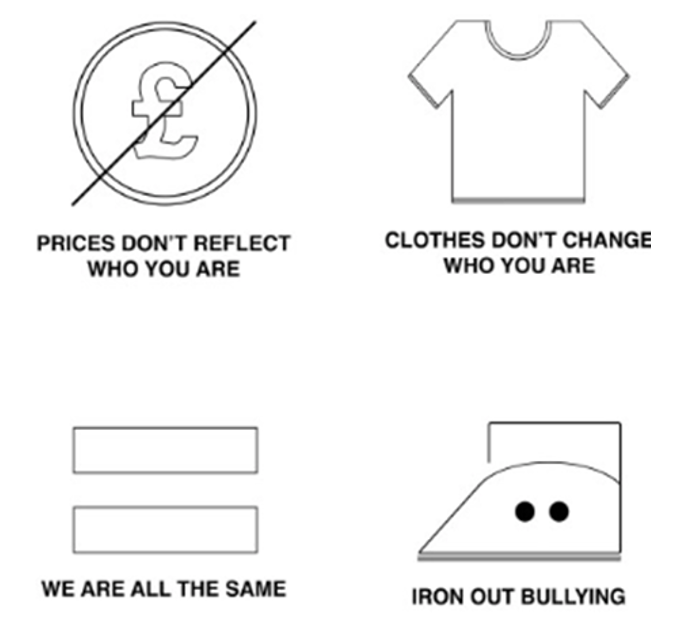
Digital images – we thought about how we wanted the image to make the viewers feel and decided instead of making the audience feel bad, we just wanted it to make them think, and realise that what they’re doing is wrong. Due to this, we wanted to make it clear on the image that it’s about clothing and thought the best way to do this was by making the image a clothing label, or a photograph of a label we have made stitched onto a piece of clothing. This then led us on to design simple symbols or icons similar to those that would be seen on a clothes label that would represent the main points of our campaign.
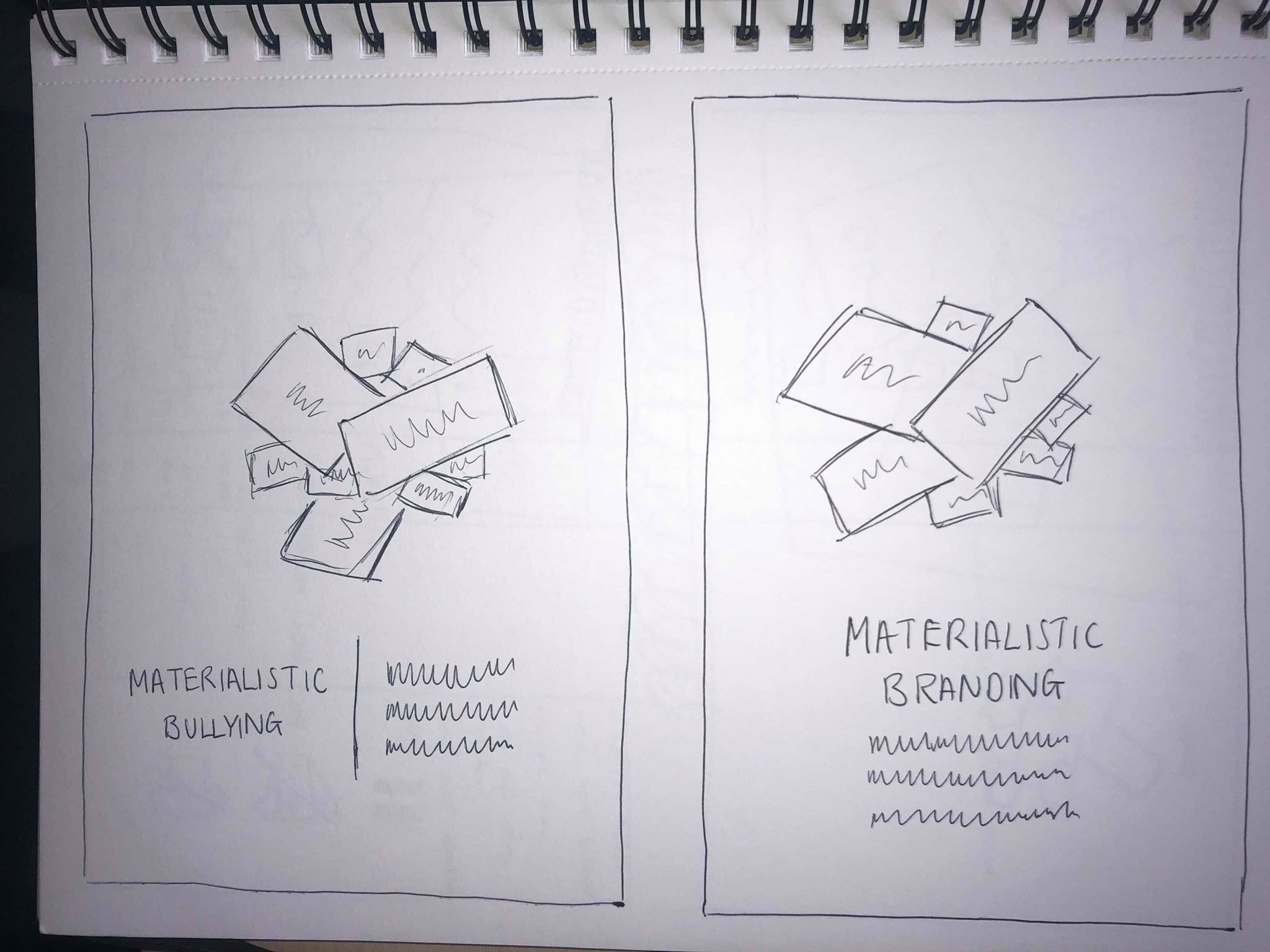
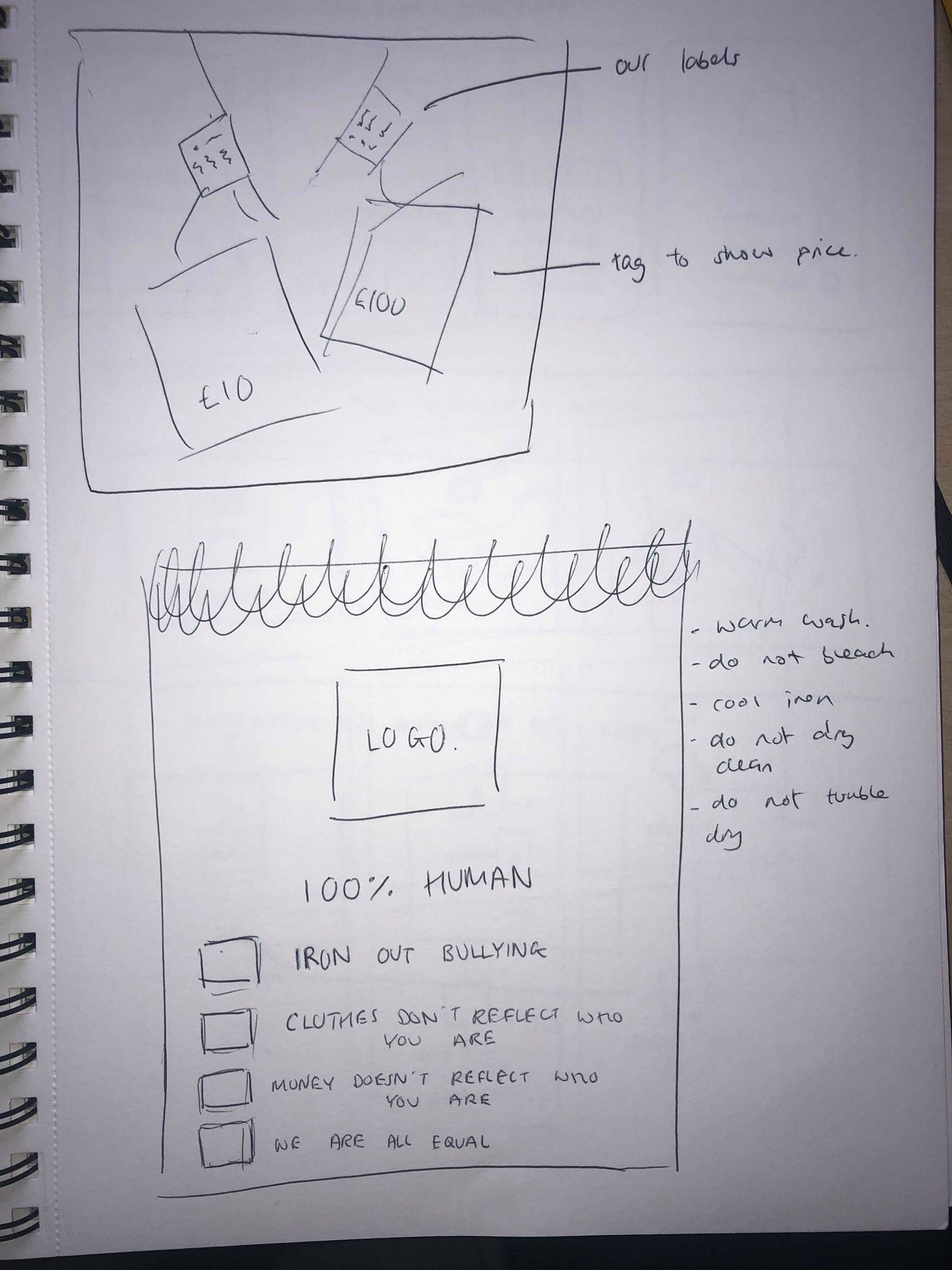
Videos – The ideas for our videos were both similar but were being produced by different people to get different outcomes. The idea behind both of them was to create videos which show 2 pieces of clothing side by side which look practically identical and show the audience that one is very expensive compared to the other which is very cheap. The videos would explain exactly what our campaign is about and would be easy to understand.
Design As Activism – Logo
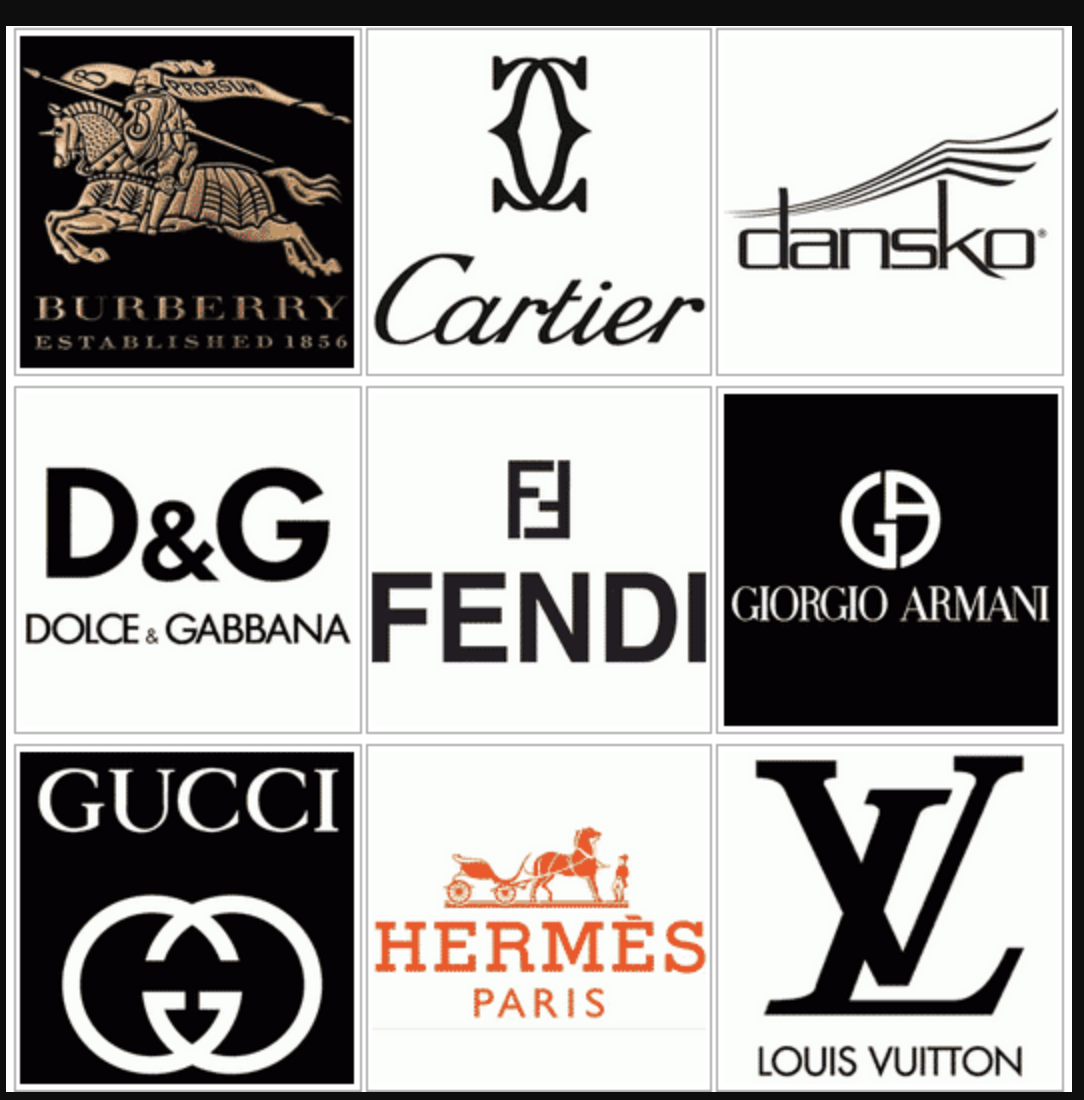
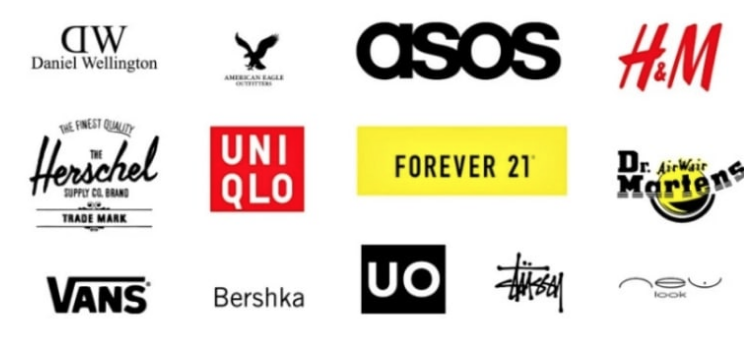
Before designing any posters or videos, we thought designing a logo would be the best way to start the process. I started off by looking at other clothing brand logos, ranging from designer brands such as gucci, Louis Vuitton etc which are very expensive to highstreet brands such as Asos, H&m etc which are much more affordable. the design elements in many of the logos are still very similar between the 2,for example the colours on them are very often just black and white. They are all relatively simple.
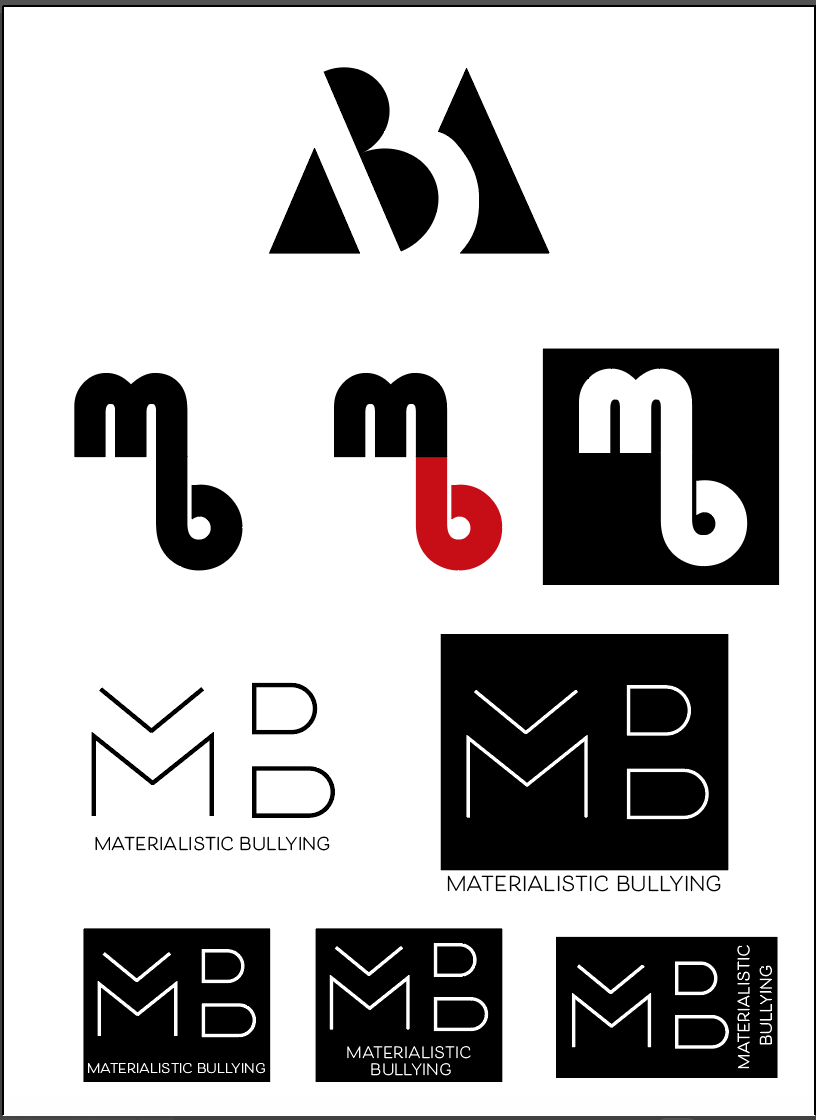
I designed some simple logos, keeping them all in black and white and adding a touch of red to one of them. I chose to keep the majority of them black and white to fit in with the colour scheme of our brand, and also because I think it looks much more modern. After showing everyone else in my group we decided the ‘MB’ on the logo at the top of the page was too hard to distinguish. We also decided the 3 ideas in the middle look much more like high street logos than the ideas at the bottom, and we thought our campaign would benefit more using the logo which looks much more like a designer brand, to give the idea that just because it looks expensive and designer, it’s the logo for an anti bullying campaign.
We then had to think about which one to use out of the 5 ideas. We initially ruled out the logo in the white as we though the black background can be seen in many of the designer logos such as Gucci and Giorgio Armani. We then ruled out the 3 variations at the bottom as we thought the black box being a rectangle doesn’t appeal to the eye as much as it does if it’s square.
After deciding on the logo, we also thought about a tagline or slogan and decided on ‘It’s Their Choice Not Yours’ as we thought it would be thought provoking for everyone involved in this type of bullying, and would make many people think more about things they say to people. We also looked back at our research and thought more about people dressing a certain way to fit in with their peers, and thought this tagline was a good way to make the ‘peers’ think twice before commenting on what others are wearing.
Design As Activism – Idea Generation #2
Following on from the last time we met we decided choose our theme, or what ideas we planned to make. After looking at our research, we decided one of the most promising ideas we could come up with was to design a ‘clothing brand’ and use it to create posters, videos and gifs. We wanted to use the platform of our ‘clothing brand’ to make it clear that it doesn’t matter if you can’t afford to wear designer clothes which cost much more money, because they are exactly the same as highstreet brands. We planned to use it as a slightly ironic way to make fashion style videos and posters which would reach our target audience and instead of selling them overpriced clothes, it would make them aware of the fact that clothes are the same no matter how much they cost.
We then decided the clothing brand needed a style, so we thought about how we wanted it to look, what colours, fonts etc. We decided we wanted our style to be quite contemporary, using lots of white for the backgrounds for all of our work, with all the text in black to keep the theme minimal and modern. We also decided to use slight touches of red in all our work to catch the eye of the audience and make them want to look at it and read more about it.
Design As Activism – Research
After deciding on our idea, I carried out some research into how much bullying really goes on over clothing, and I wanted to find out specifically how much it goes on in schools,and if it is taken seriously by teachers or people higher up within the school system. After discussions within my group, we spoke about how this type of bullying, from our experience, can tend to be seen as a joke, comments being made about the way someone dresses could be seen as comical by many people, even the person it’s directed towards, however others may find it much more hurtful.
In an article by The Guardian, which is titled “Teachers notice pupils are under pressure to buy certain brands and products to fit in with their peer groups”, teachers from schools were interviewed about bullying of this kind going on in schools. ‘Research from the teaching union, the Association of Teachers and Lecturers, says children are under heavy pressure to buy certain brands and products to fit in with their peer group.’ This backs up our point that whether many children realise it or not, even though they may not be getting bullied, they still feel the need to buy designer clothing to fit in with their peers. ‘Dr Mary Bousted, ATL general secretary said: “Bullying of this kind can be quite insidious, it can just be a look that a child is given, children feel under immense pressure to look right and having the key brands is part of that”.’ I think this in itself shows that teachers are noticing this issue going on, however the problem they are having is that it is extremely hard to protect students from commercial aspects, as many teachers are unable to bring about a change in how their students dress.
We also looked into a charity called ‘Ditch The Label’ who are an anti bullying charity who posted a bullying survey on their site. They found that 50% of young people have bullied another person, 30% of which do it at least once a week. They also concluded that appearance is cited as the number 1 aggressor of bullying, with 51% saying they were bullied because of attitudes towards how they look. We also looked at a few of their designs and how they tackled anti bullying campaigns.
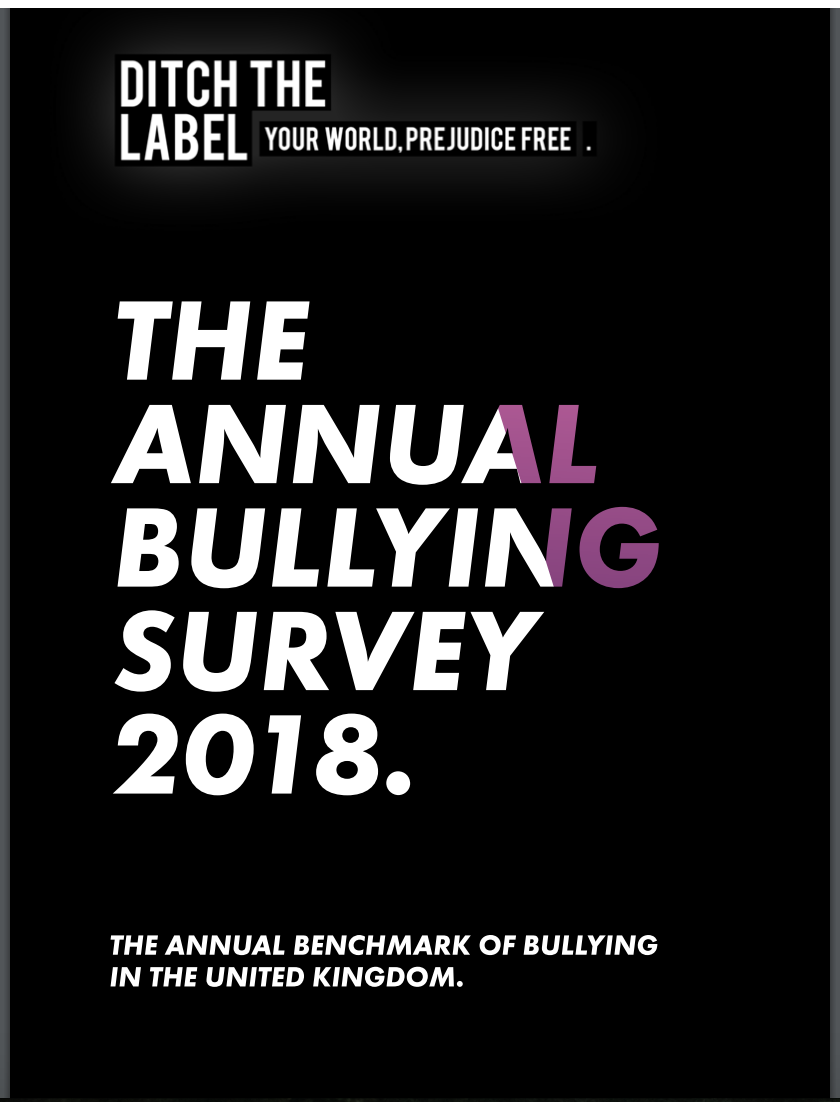
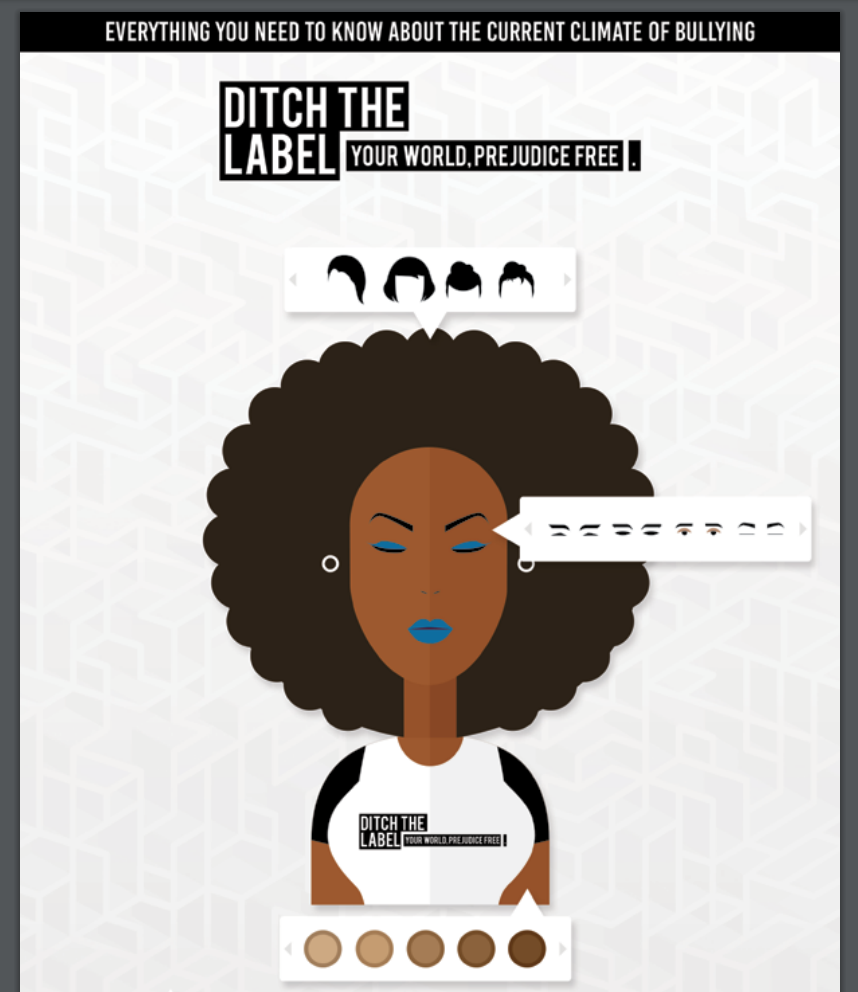
These are both Front covers for their annual bullying surveys, although both of them are contemporary and have a modern feel to them, i don’t think they do enough to make it clear to the reader that the bullying going on is as serious as it is, and especially the example on the top in black, other than the words bullying in the title it doesn’t show any imagery which would make you think about bullying like the bottom one does.
This research backs up our ideas that it does go on in schools more than a lot of people realise, and even though it may come across as a joke, or people may not take it seriously enough to brand it as bullying, but the research shows that children and young adults are under immense pressure to fit in with friends by buying designer clothing. Teachers are at the forefront of this, seeing the children who this is happening to every day and I think if 85% of these teachers think “possession of fashionable goods is important to their pupils” then it is a much larger problem than a lot of people may realise.
After the research, me and my group concluded that our campaign shouldn’t be about banning designer good from schools but more about making people aware, whether it be young kids, young adults or parents, that more often than not, the difference between an expensive designer t shirt and a regular high street t shirt is very minimal, and that it doesn’t make you any different, just because you aren’t wearing designer clothing. We wanted to show that just because you may not be able to afford it, or simply don’t want to spend the money on it, it’s your choice what you wear and no one else’s.
https://www.theguardian.com/education/2008/aug/11/bullying.schools1 https://www.ditchthelabel.org/research-papers/the-annual-bullying-survey-2015/, https://www.ditchthelabel.org/research-papers/the-annual-bullying-survey-2018/
Design as Activism – Idea generation
After deliberating with my group about what campaigns to do, we looked at ideas such as mental health, bullying, hunting/poaching and pollution. Overall we decided that a bullying campaign was something we could relate to much more and a target audience of our age group was one we could go for, we also could think of a lot of different areas of bullying we could explore. After listing different ideas, we decided that bullying over the way someone dresses or the clothes people wear is something none of us had ever seen before, but was also something we had all seen or even been a part of multiple times. It’s an issue which goes on a lot, especially through years of education. The issue could be simply with what people chose to wear, but we thought the worst bullying takes place when people feel the need to spend a lot of money on designer clothing which more often than not, looks very similar to high street brands. This was the general idea of our campaign.
We thought the brand would be a way to show everyone, from people who wear all designer clothing to people who wear none, that it doesn’t matter what yuo wear, and that wearing a £200 t shirt instead of a £2 one doesn’t make you any better than anyone else.
 Ben Jackson