
Our new brief is based around branding an exhibition which must be fully imagined and developed by myself, based on a variety of themes to choose from. We were given a number of themes and there was a few which instantly stood out, such as Beyond Borders, Uniform and Modify.
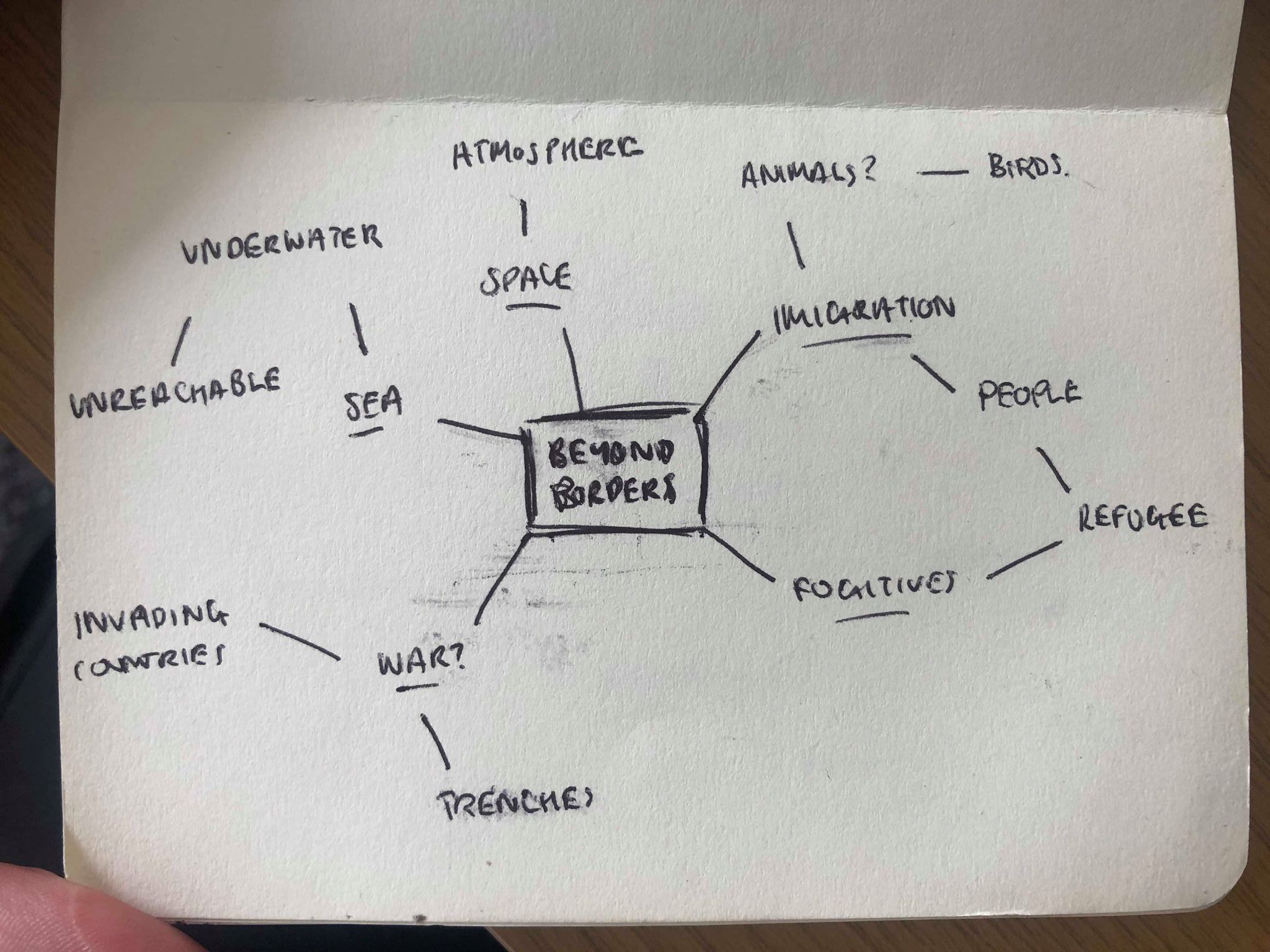
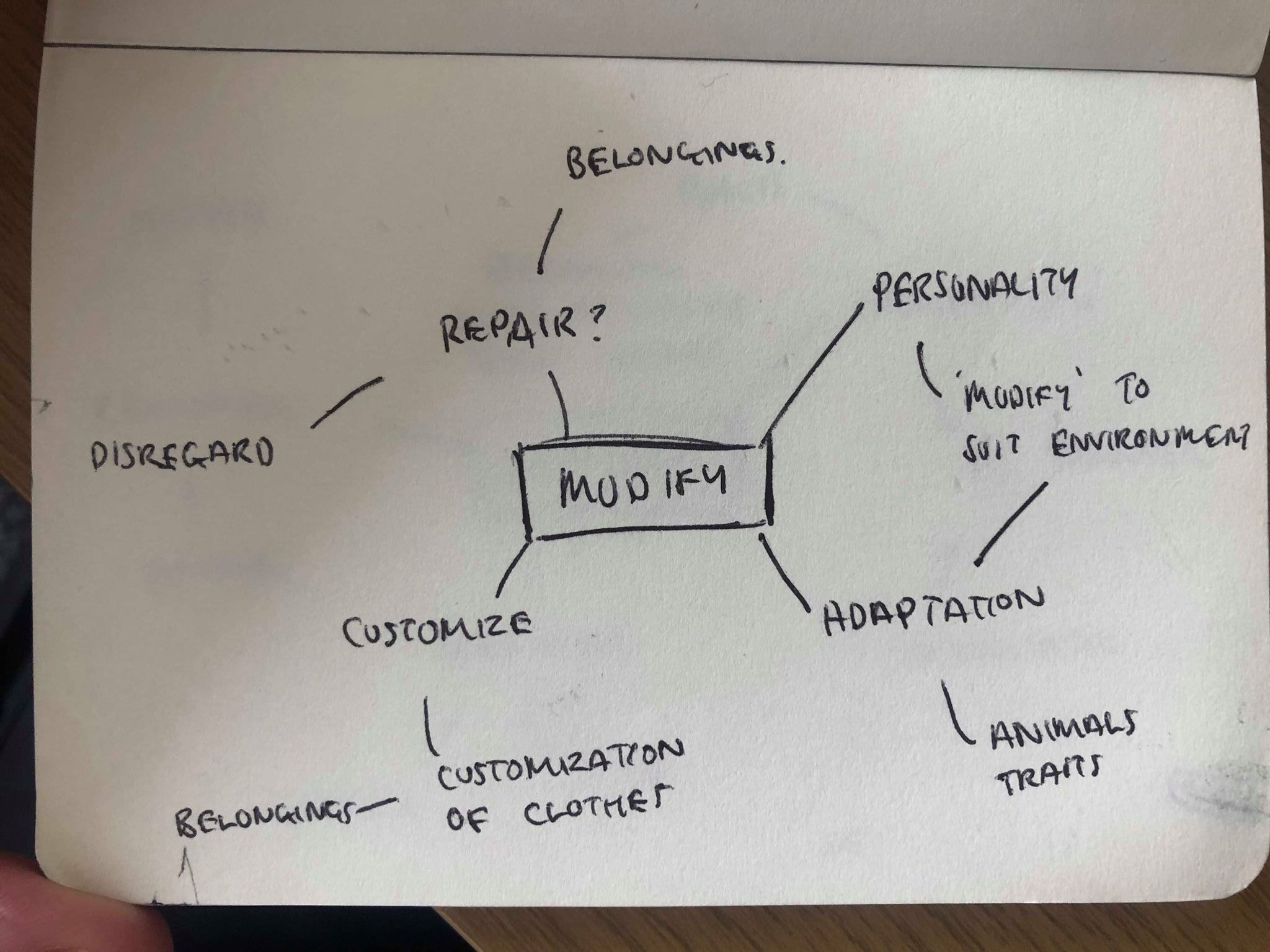
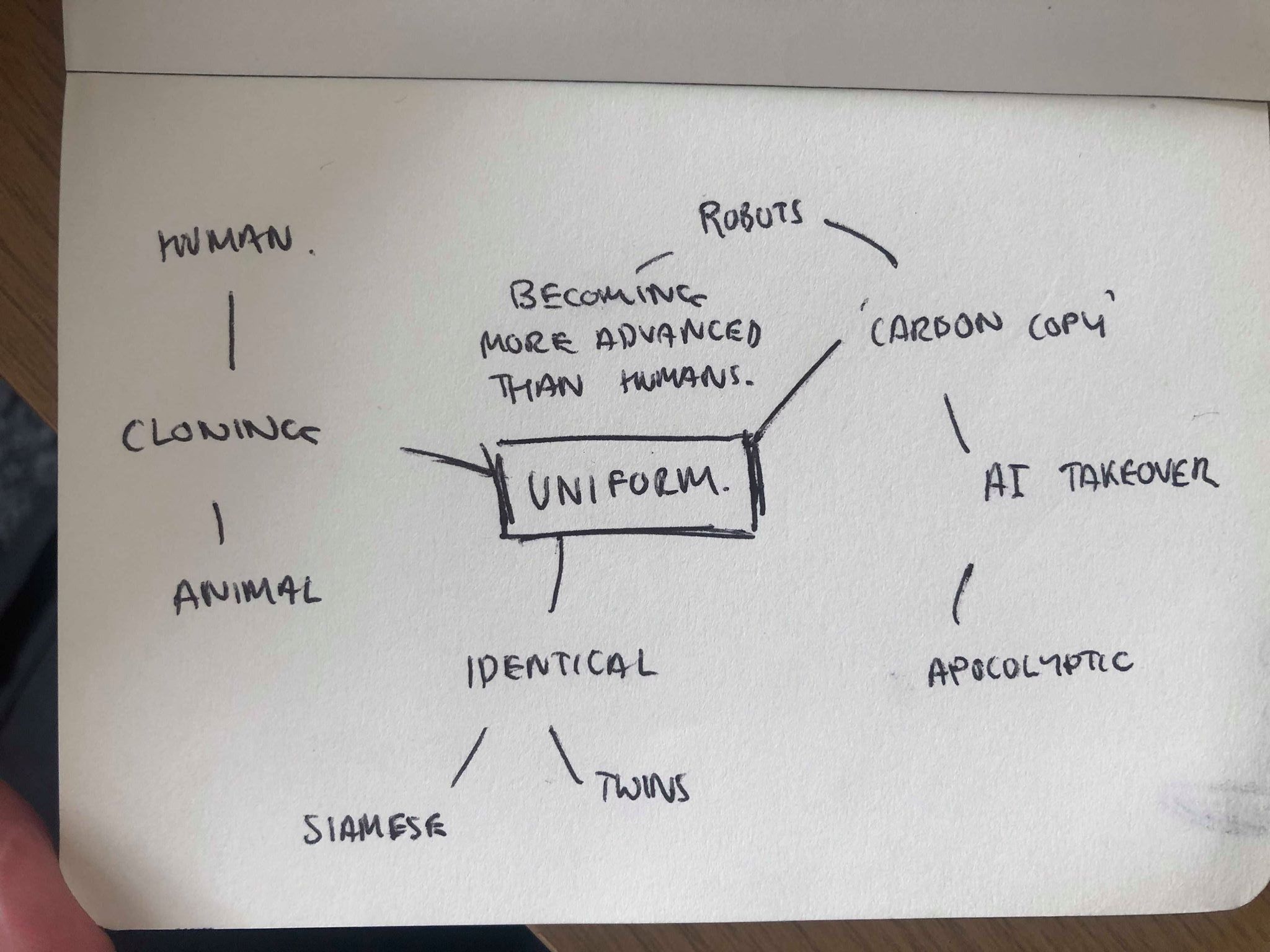
Although Modify and Uniform both had some great ideas I felt they were all too literal for the theme and didn’t push the brief as much as I would like, I decided to go with Beyond Borders as I thought some ideas were much more outside the realm of what would be expected from beyond borders.
Instantly when thinking about the theme of Beyond Borders ideas like refugees, war etc instinctively came to my head, but I wanted to make sure I steered clear of the obvious and cliche ideas. I took the idea of a border as something which isn’t necessarily a barrier, and started thinking more into physical borders that we as humans are currently unable to break. This is where the idea of the underwater came in. I recently watched the documentary ‘Blue Planet II’ in which David Attenborough explores the deep sea. He explains the barriers we have to the deep sea and why those barriers are there, he also explains what we currently know about the sea; we only know 5% of whets actually down there, and more people have been to space than discovered the deep depths of the sea. The idea that although the sea is on on our earth and is largely unexplored really intrigued me and fits in nicely with the idea of Beyond Borders. Although there is no physical barrier, diving deep into the sea for long enough to discover more life is something which is currently beyond our capability.
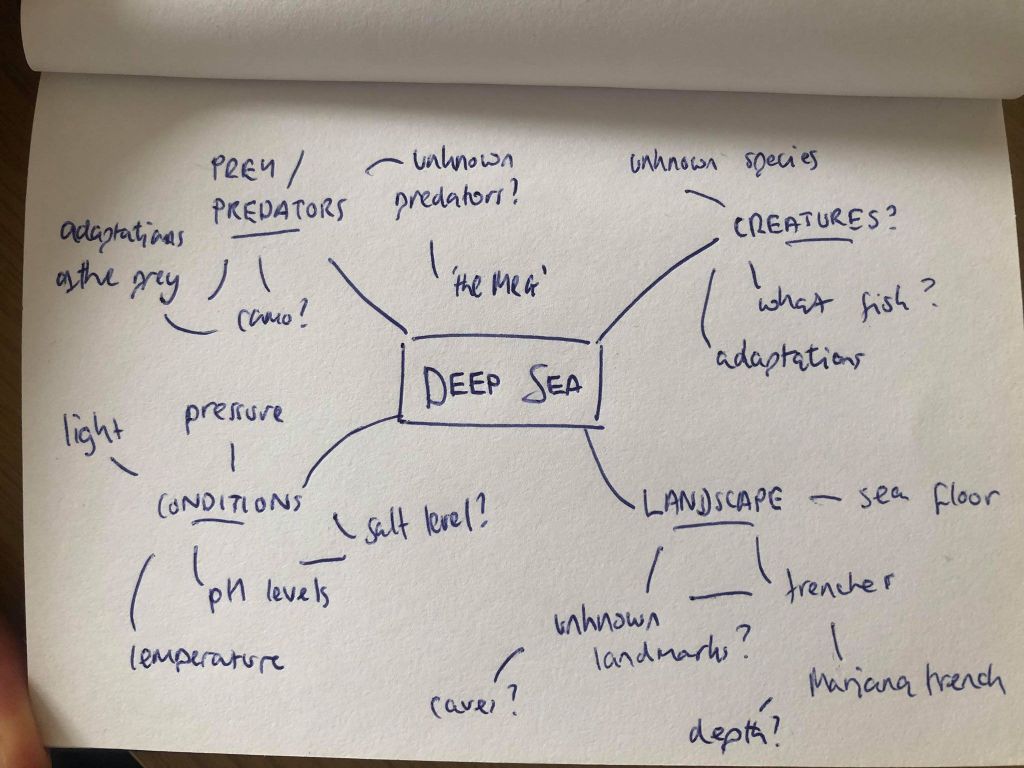
Next it was a case of narrowing down ideas I had to create the idea of what the exhibition would be about. I may want to narrow it down to one aspect of keep the exhibition about a collection of everything. Firstly I wanted an overview of what we know and what we don’t before looking into specifics.
The Sea – Overview
60% of our planet is covered by water over 1,600m deep, and nearly half the world’s marine waters are over 3,000m deep.
The deep sea starts where the sunlight starts to fade, around 200m below the surface of the ocean. A twilight zone extends down to 1,000m, after which almost no light penetrates. The water is cold, reaching 3ºC, and contains very little oxygen. And the weight of the water above creates enormous pressures, up to 1,000 times that at the surface. With no sunlight, plants cannot grow in the deep sea. And while animals and bacteria have been found wherever people have looked, we know very little about these dark, cold depths. More people have travelled into space than have ventured into the deep.
Incredible biological discoveries have been made in the last 30 years. These include entire new ecosystems such as cold-water coral reefs and vibrant communities based around chemicals pouring from the Earth’s crust, as well as a whole host of alien-looking fish and other animals. Scientists now think there may be more species in the deep sea than in all the other environments on Earth combined – by some estimates, as many as 100 million species may live there.
After researching into the sea it is quite apparent how little knowledge we have on such a vast subject and how much we still have to learn. I think the idea of the unknown is definitely a concept I could experiment with.
Creatures – Predator/Prey
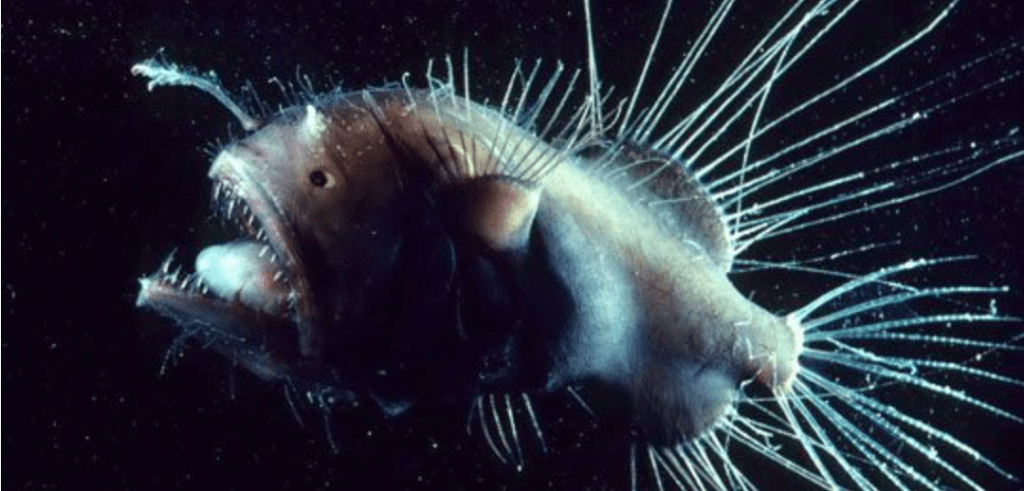
Imagine following a warm, inviting light, only to find a mouth of razor-sharp teeth directly behind it. That is the unfortunate fate of the deep sea anglerfish’s prey. Deep sea anglerfishes have evolved a cunning method of hunting: they use their bright lure, which gets its glow from specialized bacteria, to entice fish and crustaceans to draw close to the anglerfish. Only females have the lures, however. They also use it to attract males, who will bite onto the female and fertilize her eggs.
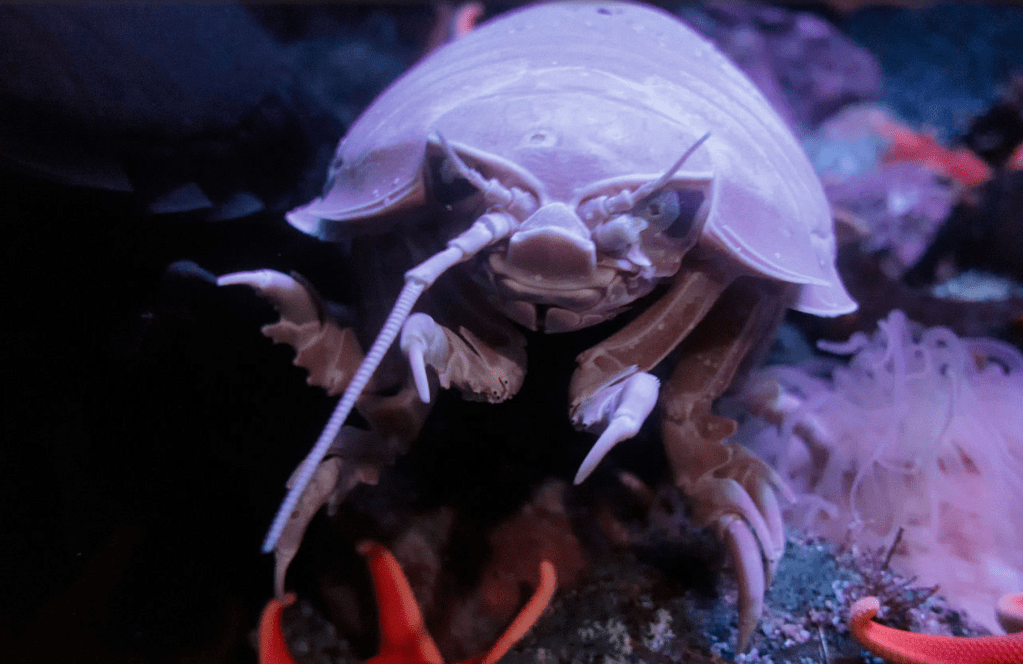
A giant isopod is to a roly-poly bug as King Kong is to a gorilla: it’s bigger, scarier and could easily star in a B-grade horror movie. The giant isopod is a crustacean, the group that also includes shrimp and crabs, and is closely related to your friendly neighborhood pillbug. They are carnivores who feed on the ocean floor at depths up to 7,000 feet (2,100 meters). Because meals in the deep ocean floor can be few and far between, giant isopods are able to go long periods without food and will binge eat when they can.
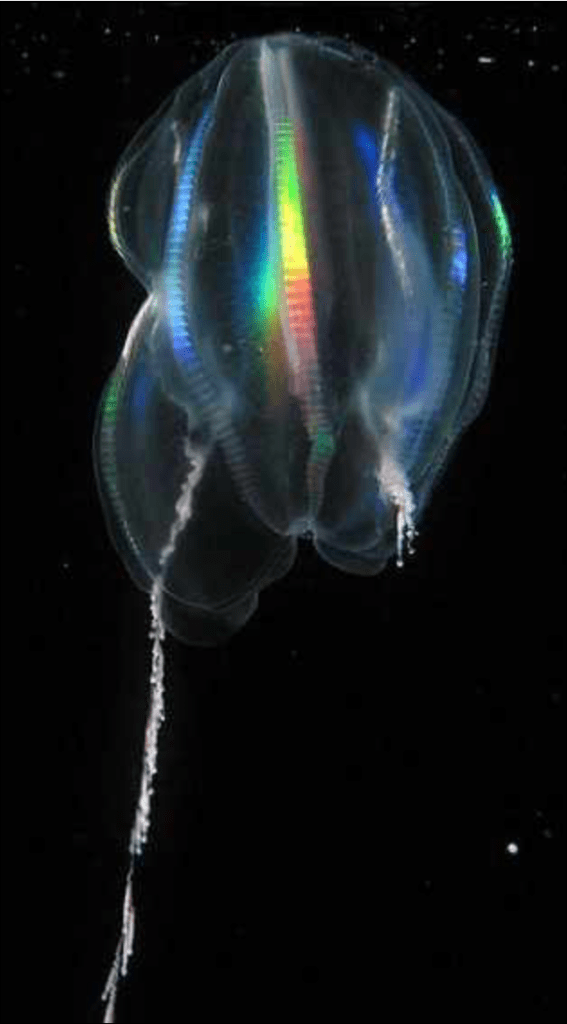
ctenophora emit a blue or green light that can only be seen in the dark. They also secrete ink that luminesces most brightly in the smaller bodies of young comb jellies. A rainbow effect is created when light scatters through the distinctive comb-like tentacles of the ctenophore.
Many different species of coral, like the one pictured here from Portugal, are bioluminescent. Scientists are unsure why the corals glow blue, but they think it may serve as a warning to other organisms that the coral’s prickly spines are covered in a potentially toxic slime.
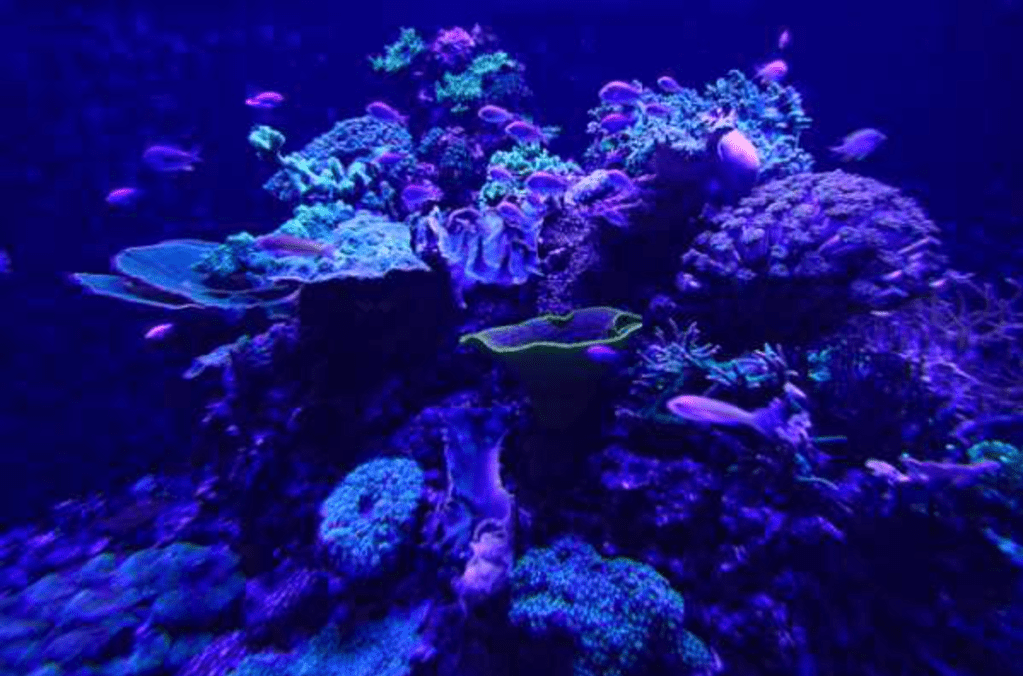
There are so many know species in the ocean and specifically the deep sea to research, however it was made clear very early into my research that all the creatures that dwell at the bottom of the sea all share very similar features. Firstly nearly all known species are bioluminescent, some fish dangle a light in front of their mouths to lure in prey, some squid shoot out bioluminescent liquid instead of ink to confuse predators, and some species even use bioluminescence to attract mates. I think the idea of bioluminescent colours is one which I need to experiment and I think the visuals that could come with this could be great. The idea of the unknown and the species which we are yet to discover also gives me ideas into how to convey that in my designs, possibly using blurred visuals to illustrate it.
Conditions
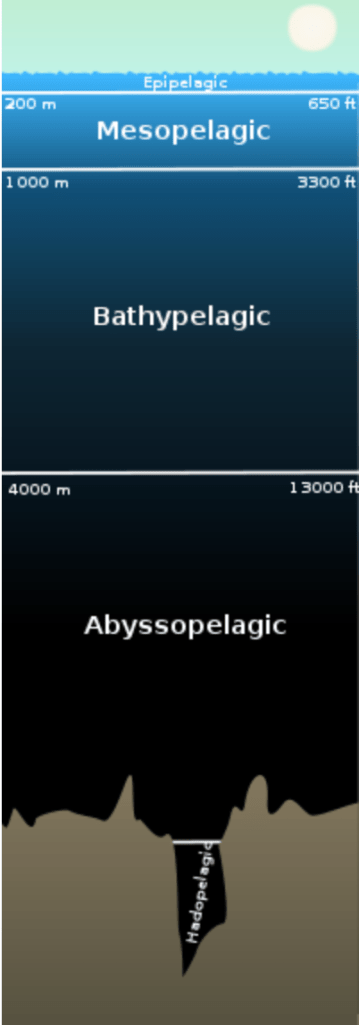
The sea is said to be split into 4 main zones with the exception of the trenches are the bottom of the ocean. The Epipelagic Zone (Sunlight Zone), the Mesopelagic Zone (Twilight Zone), the Bathypelagic Zone (Midnight Zone) and the Abyssopelagic Zone (Abyssal zone). The zones I’m interested in are those which lie closest to the bottom of the ocean and are largely unexplored, in particular the Abyssal Zone. In this zone temperatures are near freezing point, and there is no penetration of natural light. Pressure is also high due to the weight of the water above. Invertebrates like sea stars and squids can survive in this environment. Over 75% of the ocean floor lies can be found within this zone with the continental rise starting here. The deepest zones are the ones that really fascinates me as it’s the one that fascinates me the most. I think the idea of the darkness and coldness, as well as the extreme pressure could be a nice way of experimenting with visuals using cold, dark colours in contrast with the bioluminescence of the fish.
Landscape
It’s not all flat, however. In some places the seabed drops down into trenches. The deepest is the Mariana Trench in the western North Pacific Ocean, whose deepest point is an incredible 10,911m below the surface. The seabed also rises to form mountains. Running for over 56,000km through the middle of all oceans, the Mid-Oceanic Ridge is the world’s longest mountain range. It’s created by lava erupting from the Earth’s crust – eruptions that account for 95% of all volcanic activity on our planet!
There are also a number of deep-sea geysers called hydrothermal vents and isolated underwater mountains called seamounts.
Although we are aware that the seafloor contains many landmarks, mountains and trenches just like the earths surface, only 1% of it has actually been explored and scientists believe the sea bed is home to ecosystems which we have never discovered. I think this idea of the unknown is an idea I can really experiment with going forward, and the fact that we only know about 1% of the sea floor is another factor which could contribute to the design.
 Ben Jackson
